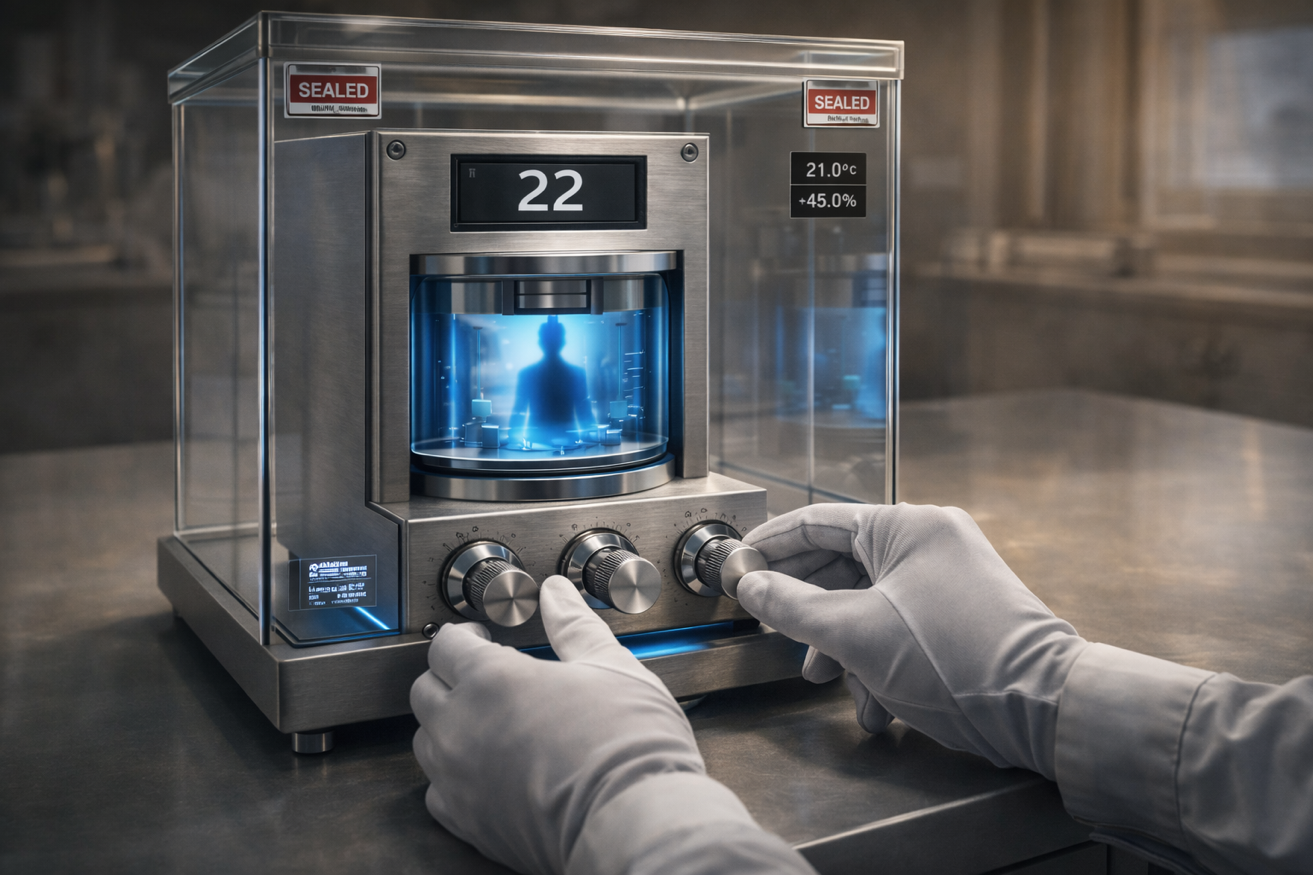
INTRODUCING STRESS NUMBER™ — THE FIRST BEHAVIORAL HEALTH BIOMARKER

The Future of Behavioral Health Has a Number

A pre-diagnostic behavioral health biomarker designed for early, repeatable measurement at population scale.

Built on measurement architecture first published in a 2009 international patent filing and clinically validated in collaboration with Mayo Clinic.

What This Is

Five Things To Know

01
Category Originator
Not a participant. Not a competitor. The originator.
First patent filing: 2008. First international publication: 2009. The category didn't exist before this.
02
Infrastructure Metric
Not a program. Not a tool. Not an app.
Stress Number™ is a measurement standard — like FICO, A1C, or HEDIS.
03
Clinically Validated
Mayo Clinic collaboration. Peer-reviewed publication. EHR-ready.
This is the level of proof that health systems and payers require.
04
Active IP Estate
27 patent families. Six architectural layers. Lineage from 2008.
Patent activity is ongoing. This is not a single filing — it's a portfolio.
05
Controlled Access
Institutional Access is reviewed individually.
A single Founding Institutional Steward seat is currently under consideration.
Category Firsts

Before There Were Platforms, Programs, or Categories

Stress Number™ established the foundation — first filed in 2008, published globally in 2009.

01
First Category-Originating Prior Art
Foundational measurement architecture publicly disclosed in international patent filings (2008–2009), predating the digital behavioral health category.
02
First Pre-Diagnostic Behavioral Health Biomarker
A pre-diagnostic behavioral health signal designed for early, repeatable measurement — before crisis, before diagnosis.
03
First Clinically Validated Multi-Domain Metric
Validated across home, work, and social domains through peer-reviewed research with Mayo Clinic.
04
First Behavioral Health Metric Built as Infrastructure
Designed as a measurement standard — not an application, not a therapy, not a program.
05
First Biomarker Designed for Population Scale
Engineered for longitudinal, population-level measurement across clinical, employer, payer, and public health systems.
06
First Metric to Unify Stress, Anxiety, and Depression
A single normalized score capturing overlapping behavioral health risk without diagnostic labeling.

40+ documented category firsts available through Institutional Access.

The Problem

What’s Broken in Behavioral Health

Clinicians face a fragmented landscape of screening tools that don’t talk to each other. PHQ-9, GAD-7, PSS-10—each measures something different, on different scales, with different thresholds. There is no pre-diagnostic signal that works across conditions or systems.

Organizations face a behavioral health crisis they can’t quantify. Without a common metric, employers, health systems, and payers are forced to react to claims data rather than intervene early.

What’s missing is a pre-diagnostic measurement standard.

The Solution

One Number.
Three Domains.
Clinically Validated.

Stress Number™ is a clinically validated metric that measures stress, anxiety, and depression risk across three life domains: Home, Work, and Social.

Unlike single-dimension tools, Stress Number™ captures context.

It delivers a 0–30 score, validated by Mayo Clinic, with a clinical threshold of ≤23 identifying elevated risk.

It is:

  • Easy to administer (3 minutes)
  • Clinically meaningful
  • Comparable across populations
  • Actionable

One number. Three domains. Clinical precision.

Stress Number™

A Behavioral Health Biomarker

The Stress Number™ is a clinically validated biomarker that quantifies stress-related risk across home, work, and social life. It provides a single, standardized measurement designed to function across clinical, organizational, and population contexts.

The Stress Number™ represents the first clinically validated behavioral health biomarker — a standardized measurement that quantifies stress, anxiety, and depression risk across home, work, and social domains. Validated through peer-reviewed research and developed in collaboration with Mayo Clinic, it functions as a consistent measurement layer across clinical, employer, payer, and population health systems.

This marks a turning point: The Oxygen Plan™ is transitioning from experimental assessment tools toward infrastructure-grade measurement that supports decisions, stratification, and outcomes at scale.

How Measurement Standards Work
Standard Characteristic A1C (Diabetes) Stress Number™ (Behavioral Health) Current Behavioral Health Practice
Single standardized metric One number (glycated hemoglobin %) One number (0–30 score across three domains) Multiple fragmented tools, no shared metric
Longitudinal tracking Tracks change over time (quarterly) Tracks change over time (configurable intervals) Point-in-time snapshots, no consistent longitudinal record
Cross-setting comparability Same metric across primary care, specialty, payer, public health Same metric across clinical, employer, payer, population settings Different tools in different settings, no comparability
Population stratification Risk tiers drive care pathways and resource allocation Validated cutoff (≤23) enables risk stratification at scale Subjective assessment, inconsistent thresholds
Reimbursement alignment Embedded in billing codes and quality measures CPT billing pathway compatible Limited reimbursement pathways
Non-diagnostic signal Pre-diagnostic indicator Pre-diagnostic signal for behavioral risk Often conflated with diagnosis
Governance and stewardship Governed by standards bodies Governed by The Oxygen Plan Corporation No unified governance
See clinical validation
Clinical Validation

Built With Clinical Rigor

Stress Number™ was developed in collaboration with Mayo Clinic and validated through peer-reviewed research conducted by Mayo Clinic research personnel.

The research demonstrated ROC AUC performance of 0.88–0.92 against established clinical instruments (PHQ-9, GAD-7, PSS-10), with a validated cutoff threshold (≤23) identifying elevated risk.

Stress Number™ functions as a longitudinal measurement standard for behavioral health — analogous to how A1C functions in diabetes management — enabling consistent risk assessment across clinical, employer, payer, and population settings.

Results were published in a peer-reviewed journal—not a white paper, not a press release. This is the level of validation that health systems, payers, and regulators require before adopting a new measurement standard.

This is not a wellness estimate. It is a pre-diagnostic signal with clinical evidence.

CLINICAL COLLABORATION — Developed in collaboration with Mayo Clinic and validated through peer-reviewed research (2018).

How It Works

From Input to Insight

The Oxygen Plan™ operates as a measurement and routing layer:

1. User completes assessment

2. Stress Number™ generated across three domains

3. Risk stratification occurs

4. Guided referrals and follow-ups enabled

5. Outcomes tracked longitudinally

The platform integrates cleanly into existing workflows—supporting clinicians without replacing them.

Who It's For

Built for Systems, Not Just Sessions

Stress Number™ serves the organizations responsible for behavioral health at scale.

Health Systems & Hospitals — Pre-diagnostic screening, clinical triage, EHR-integrated measurement, and longitudinal outcomes tracking across patient populations.

Employers & Benefits Platforms — Population-level behavioral health measurement that supports early intervention, benefits design, and ROI accountability.

Payers & Managed Care — Standardized risk stratification, claims-aligned measurement, and evidence-based referral routing that supports value-based care.

Government & Public Health — National and state-level behavioral health surveillance, policy evaluation, and resource allocation supported by CPT-aligned billing.

Clinical Research & Academic Centers — A validated, replicable outcome measure for behavioral health studies, program evaluation, and cross-site comparison.

Precision in service of people.

Governance & Ethics

Measured With Care. Governed With Purpose.

Behavioral health data demands restraint.

The Oxygen Plan™ was built with governance, transparency, and ethical use at its core.

Measurement exists to support care—not to manipulate, monetize distress, or replace human judgment.

We believe infrastructure should serve people, not extract from them.

About The Oxygen Plan™

A Clearer Signal Before Crisis

The Stress Number™ measurement framework originates from a 2009 international patent publication — one of the earliest system-level architectures for quantifying behavioral stress across life domains. What is now a clinically validated, institution-ready metric began as a published disclosure that predates the digital behavioral health category itself.

Founded by Eric Lucas — the named inventor on the original filing and a former Fortune 250 VP and Corporate Officer — The Oxygen Plan Corporation has developed this work over 18 years through clinical validation with Mayo Clinic, EHR-ready architecture, and systematic intellectual property development.

The infrastructure has been self-funded and deployed through enterprise and EAP channels, including sustained engagement with Microsoft and a government entity across a workforce exceeding 100,000 employees.

Clean cap table. One institutional investor. Debt-free. 100% infrastructure ownership.

Public record priority — 2009 international patent publication
Independent clinical validation — Mayo Clinic, peer-reviewed, ROC AUC 0.88–0.92
Longitudinal stewardship — 18 years, founder-led, no dilution chaos

This is infrastructure built deliberately for the long term stewardship of the category — not a product rushed to market.

TECHNOLOGY & INTELLECTUAL PROPERTY

Built to Last. Built to Scale.

The foundational measurement architecture underlying O2OS℠ was first disclosed publicly in 2009 through an international patent publication, predating the emergence of digital behavioral health as a recognized sector. The named inventor on that original filing, Eric Lucas, has continued to develop the architecture through clinical validation, platform engineering, and systematic intellectual property expansion over 18 years.

Today, The Oxygen Plan Corporation holds a comprehensive intellectual property portfolio spanning 27 patent families across six architectural layers — from foundational measurement methodology to governance infrastructure.

The infrastructure is built on:

  • Category-originating prior art first published internationally in 2009
  • Mayo Clinic clinical validation (peer-reviewed, 2018)
  • Epic EHR integration readiness
  • CPT billing pathway compatibility

This is not a feature set. It is a defensible infrastructure position with a documented lineage that predates the market it serves.

Patent activity is ongoing.

Category Context

The Architecture Predates the Category

The Stress Number™ patent was filed in 2008 — before the App Store launched.

2008–2009
International patent publication discloses system-level architecture for quantifying behavioral stress across life domains.
2010–2012
Consumer mental health apps emerge. No shared measurement standard exists.
2013–2016
Digital wellness platforms scale across employers and payers. Behavioral health remains fragmented, subjective, and non-comparable.
2015–2018
Measurement framework clinically validated through peer-reviewed research in collaboration with Mayo Clinic.
2018–Present
Behavioral health adoption accelerates across health systems, employers, and public health. A standardized measurement layer still does not exist at scale.

Once established, measurement standards tend not to be replaced — they become reference points.

Institutional Access

Structured Access for Qualified Institutions

For qualified institutional inquiries, we provide structured access to foundational documentation including clinical validation, intellectual property timeline, and infrastructure overview. Access is reviewed individually.

A single Founding Institutional Steward seat is currently under consideration.

Contact

Start a Conversation

If you are exploring better ways to measure, understand, or support behavioral health at scale, we welcome the conversation.