— Institutional Applications —

Sixty institutional classes.
One measurement substrate.

The Pre-Diagnostic Index™ operates identically across every institutional class that prices, underwrites, governs, audits, or routes population behavioral risk. The same mathematics. Different member bases. Different actuarial frames. The same upstream coordinate.

The architecture predates the digital behavioral health era.
Filed April 22, 2008.

May 2026 · Public Documentation · Reading time ~ 12 minutes
— Read This First —

The sectors below are illustrative, not exhaustive.

The Pre-Diagnostic Index™ is universally applicable across institutional classes that carry population behavioral exposure. The sixty applications below are documented examples of the substrate's reach — not a scope limitation, not a category boundary, and not the complete set.

The mathematical foundation is unchanged across every application. What changes is the institutional frame: who carries the exposure, how it is currently priced or absorbed, and which currency the substrate stabilizes — claims, treaty risk, comp duration, quality measure variance, fiduciary documentation, sovereign coordination.

Foundational Posture
One substrate. Mathematics unchanged. Member base shifts. Currency shifts. The measurement remains the same.
01 · Same Mathematics
The PDI™ behaves identically across applications.
Two independent derivations — NAMCS-NIMH-Greenberg pathway and CDC-PMC-AAFP pathway — converge within 7.3% at approximately $42.95 PMPM / $515 per member annually. The math does not change when the institutional class does.
02 · Different Member Bases
Each class carries a structurally distinct population.
Commercial payer books, Medicaid managed care populations, reinsurer-covered lives, self-insured employer populations, Medicare Advantage enrollments, sovereign health system populations — all distinct member bases, all subject to the same upstream coordinate.
03 · Different Currencies
Each class pays in the unit of its institutional position.
Claims tail. Treaty risk. Comp duration. Quality measure variance. Fiduciary documentation. Sovereign coordination. The substrate stabilizes the variance in each class's native currency — not a single output.
— Institutional Applications —

The substrate's institutional reach.

Sixty documented applications across the healthcare financial ecosystem. Grouped by institutional class. Each tile names the structural relevance of the Pre-Diagnostic Index™ to that class's pricing, underwriting, governance, or audit position.
— Class I —
Payers & Insurance Carriers
01 – 10
Commercial Payers
01
Commercial Payers
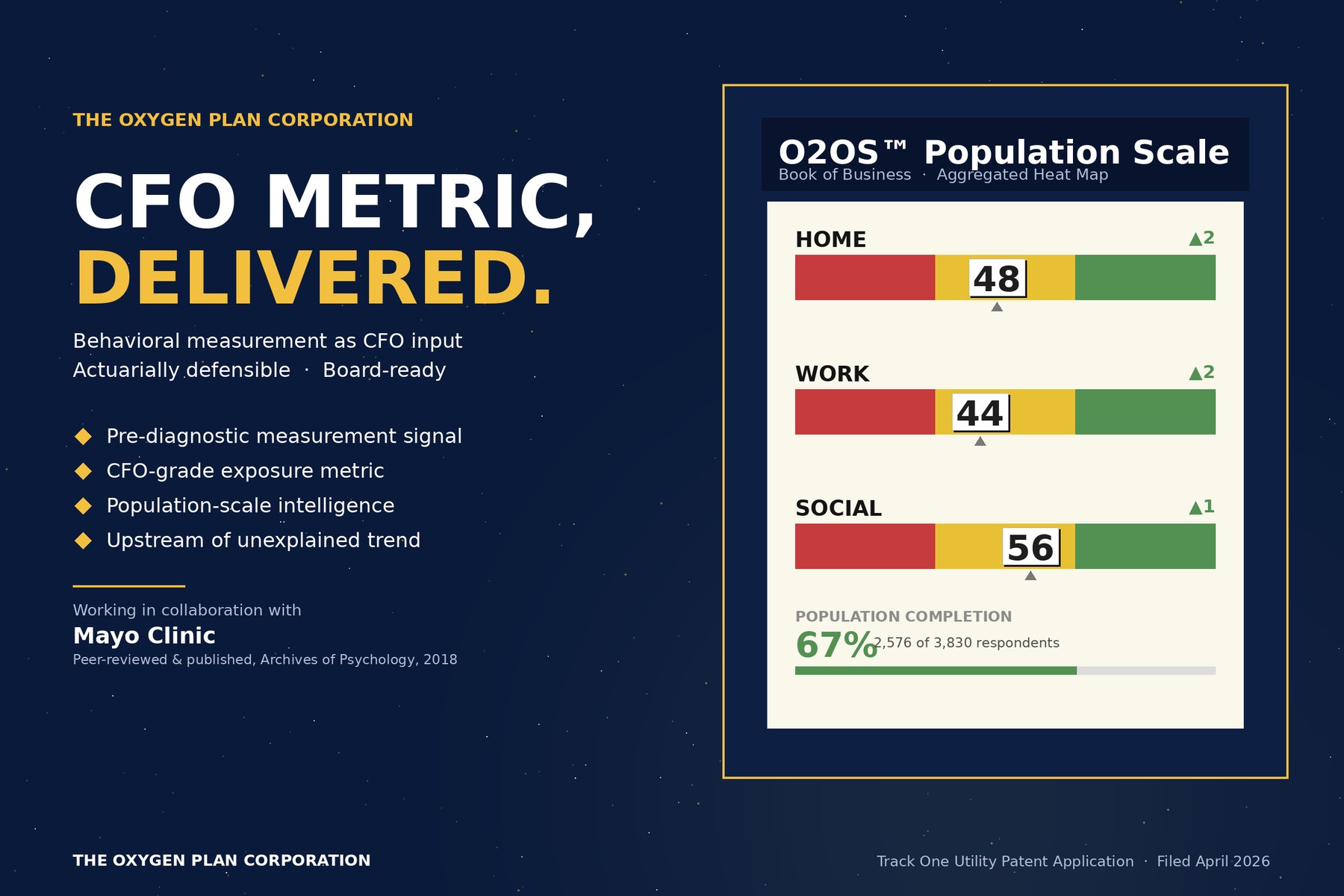
Behavioral exposure is the largest unmodeled cost driver across commercial books. Captaincy of the substrate is the highest-leverage institutional position in the application layer.
Medicaid MCOs
02
Medicaid MCOs
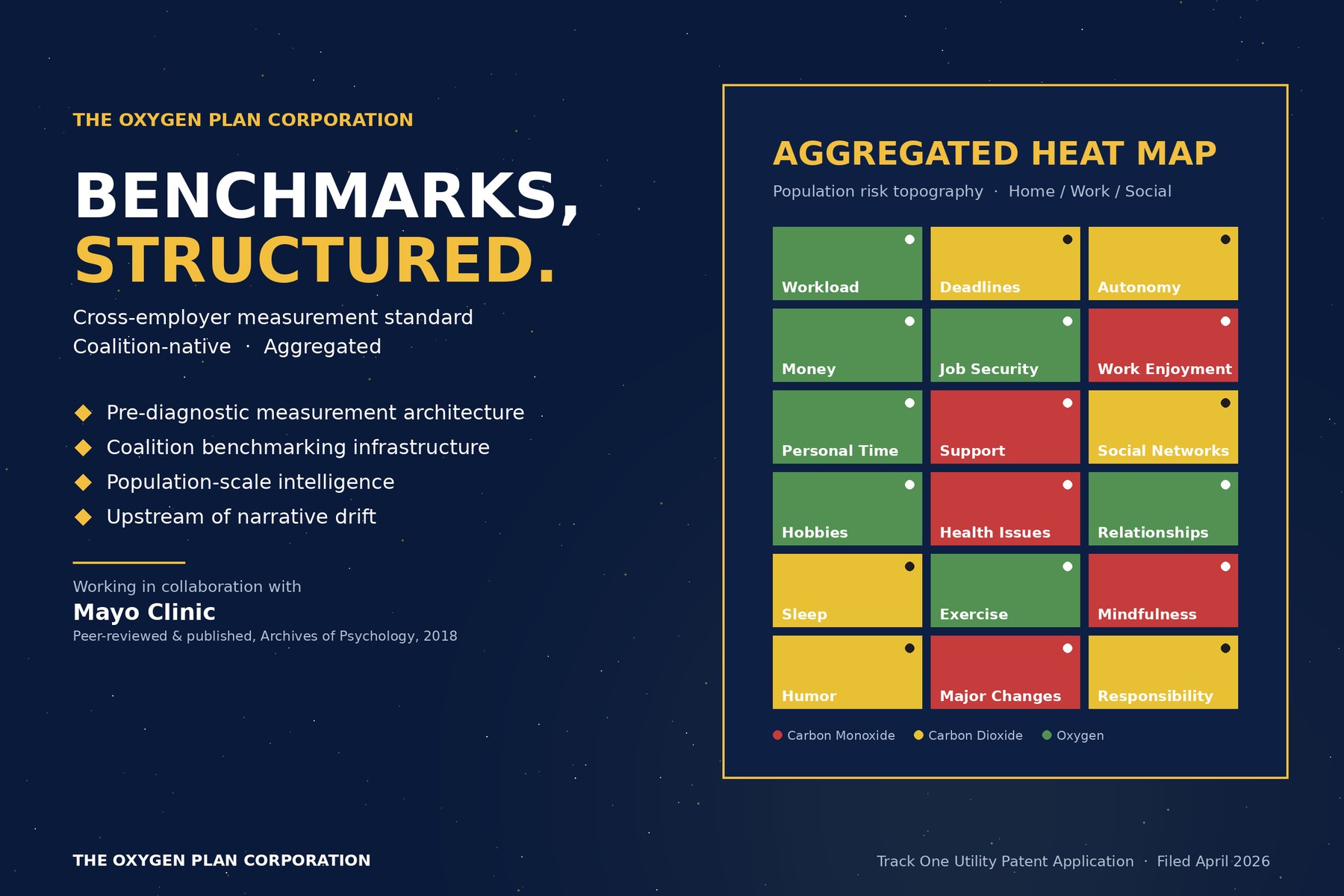
Behavioral comorbidity drives disproportionate share of Medicaid managed care cost. Pre-diagnostic measurement enables stratification before episodic intake.
Medicare Advantage
03
Medicare Advantage
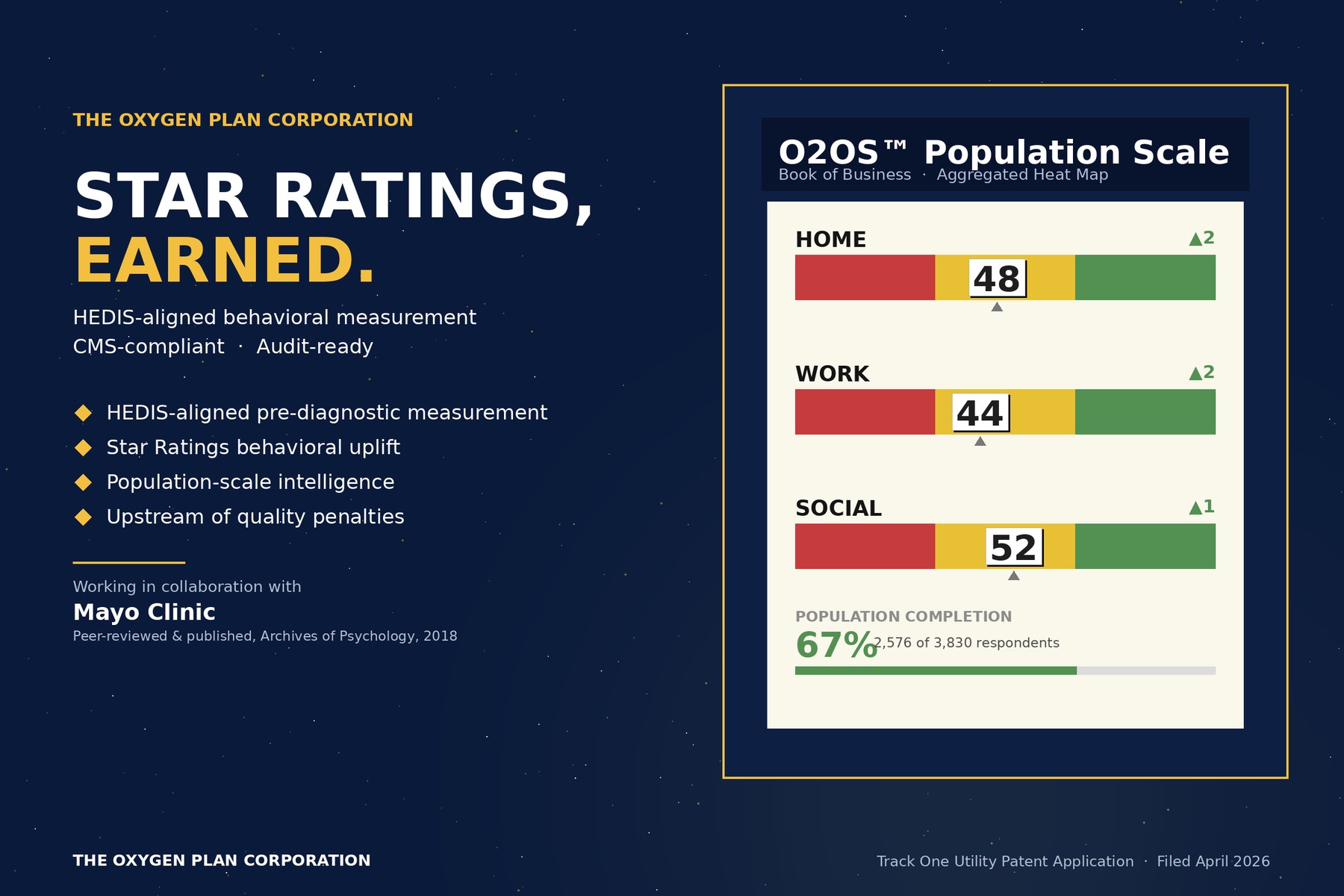
CMS Star Ratings 2027 elevates behavioral health to a weight-3 outcome measure. Plans without a structured measurement substrate carry material rating exposure.
Third-Party Administrators
04
Third-Party Administrators
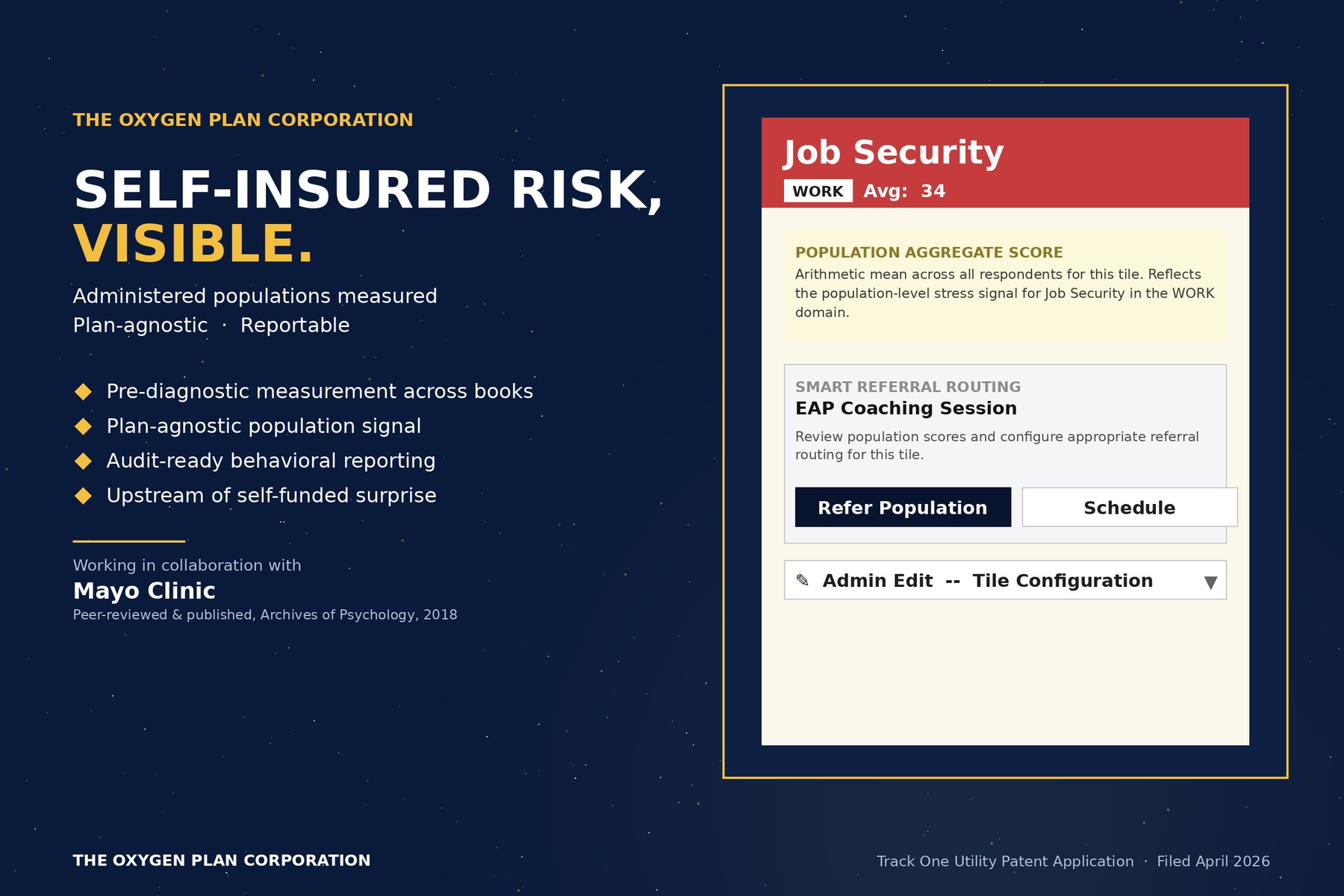
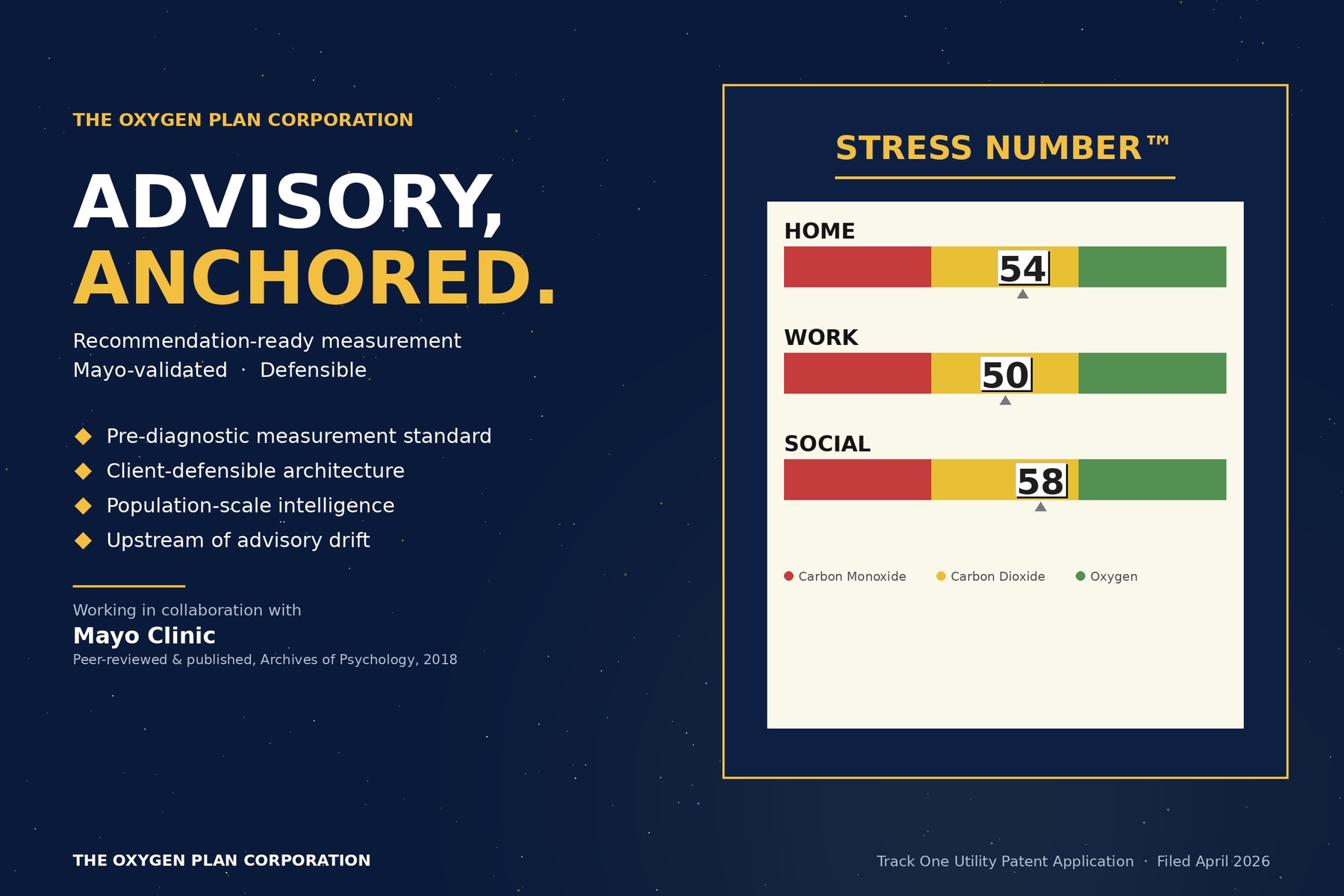
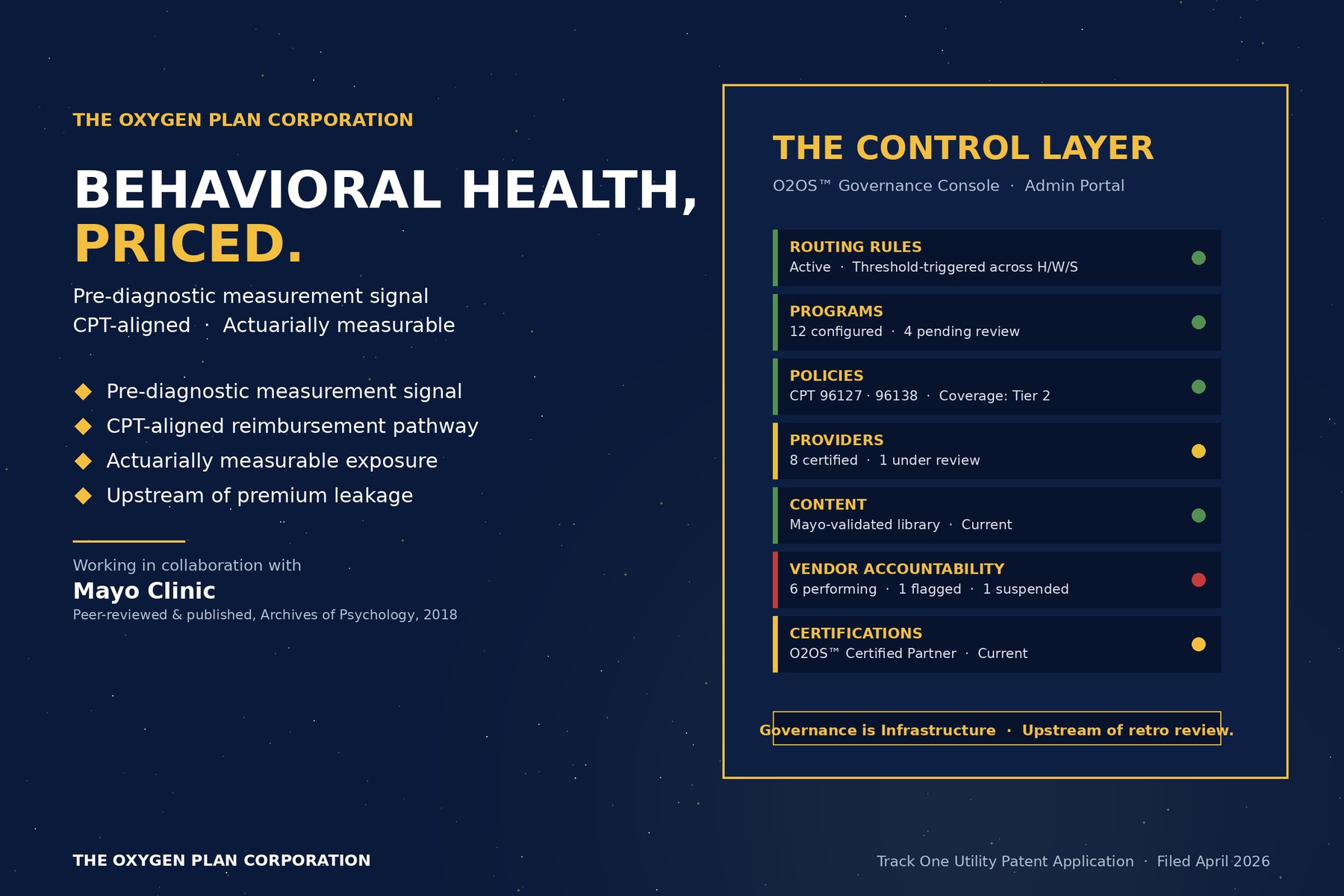
TPAs administer self-insured employer plans without an objective behavioral coordinate. The substrate provides the audit-grade measurement layer fiduciaries require.
Reinsurers
05
Reinsurers
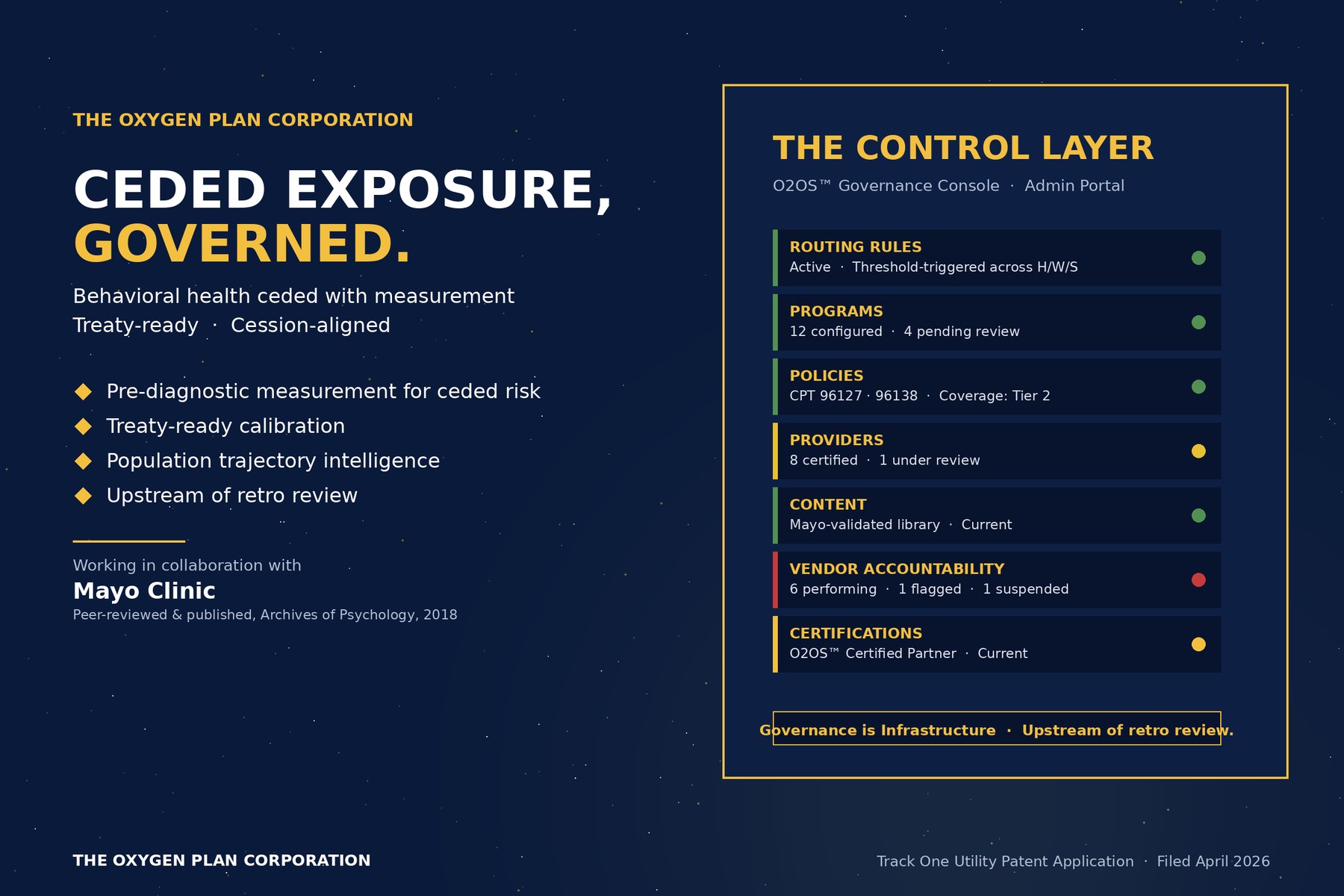
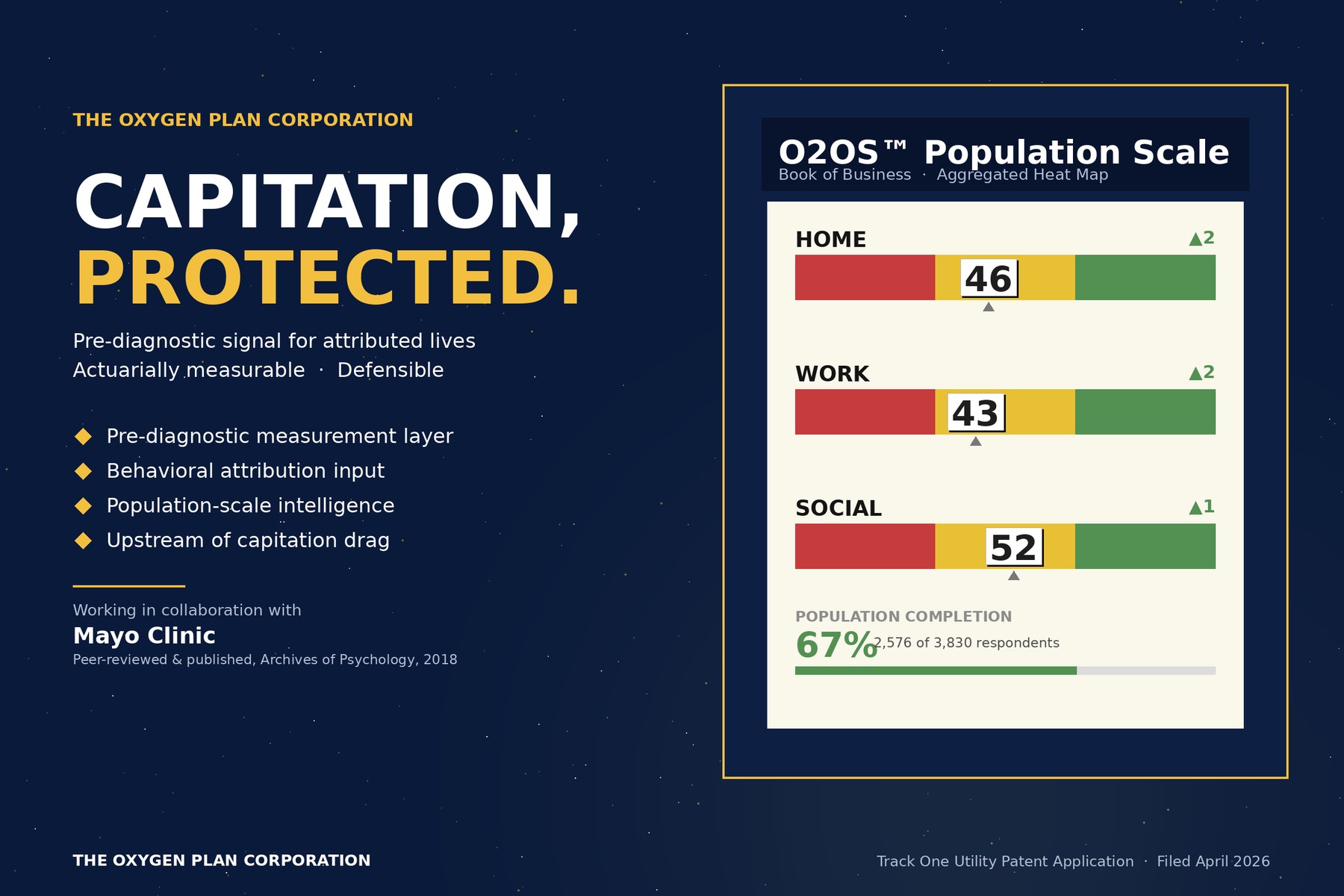
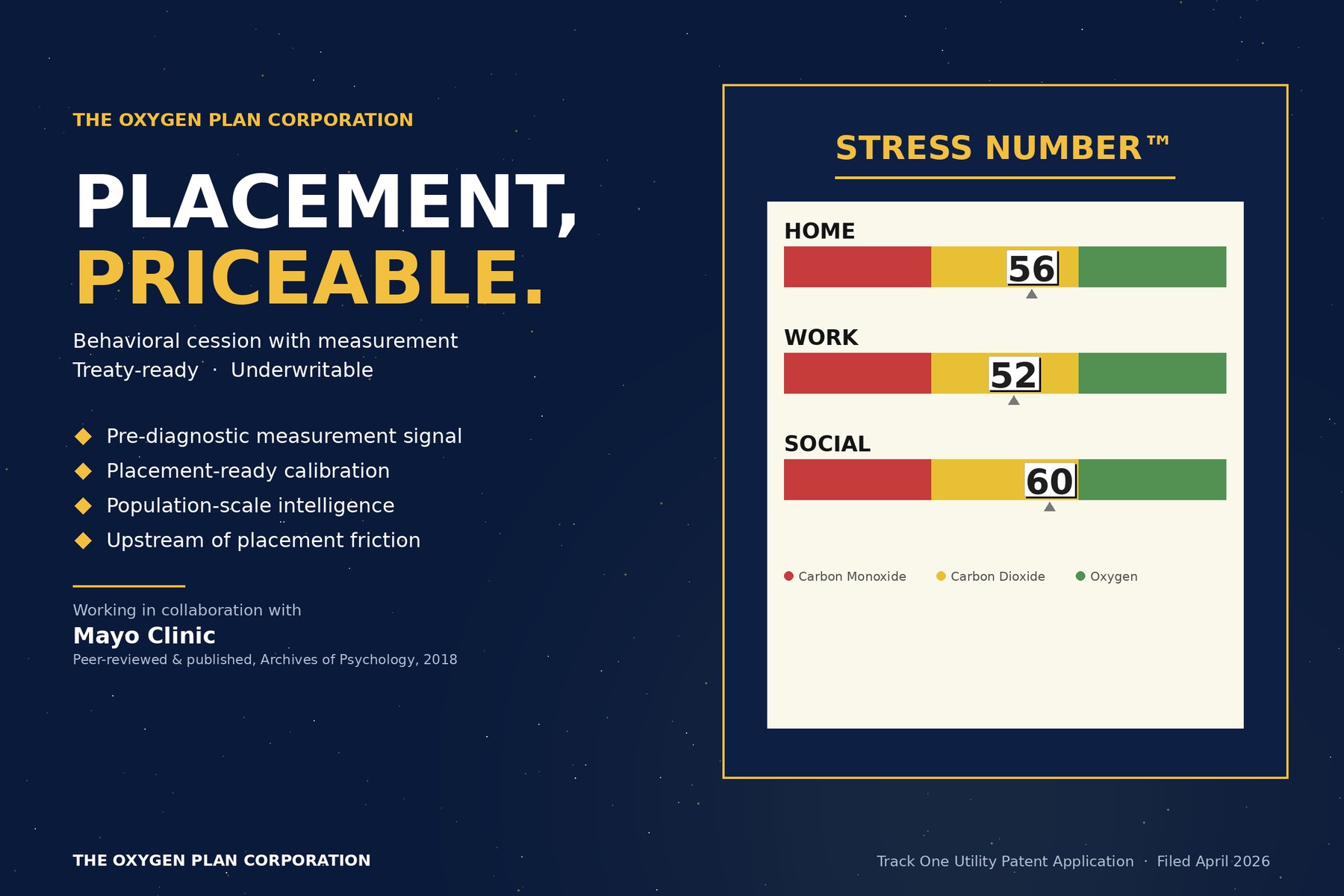
Behavioral comorbidity is among the largest unpriced exposures in stop-loss, group life, disability, and long-tail medical treaties. Treaty pricing without a behavioral coordinate is structurally lossy.
Stop-Loss Carriers
06
Stop-Loss Carriers
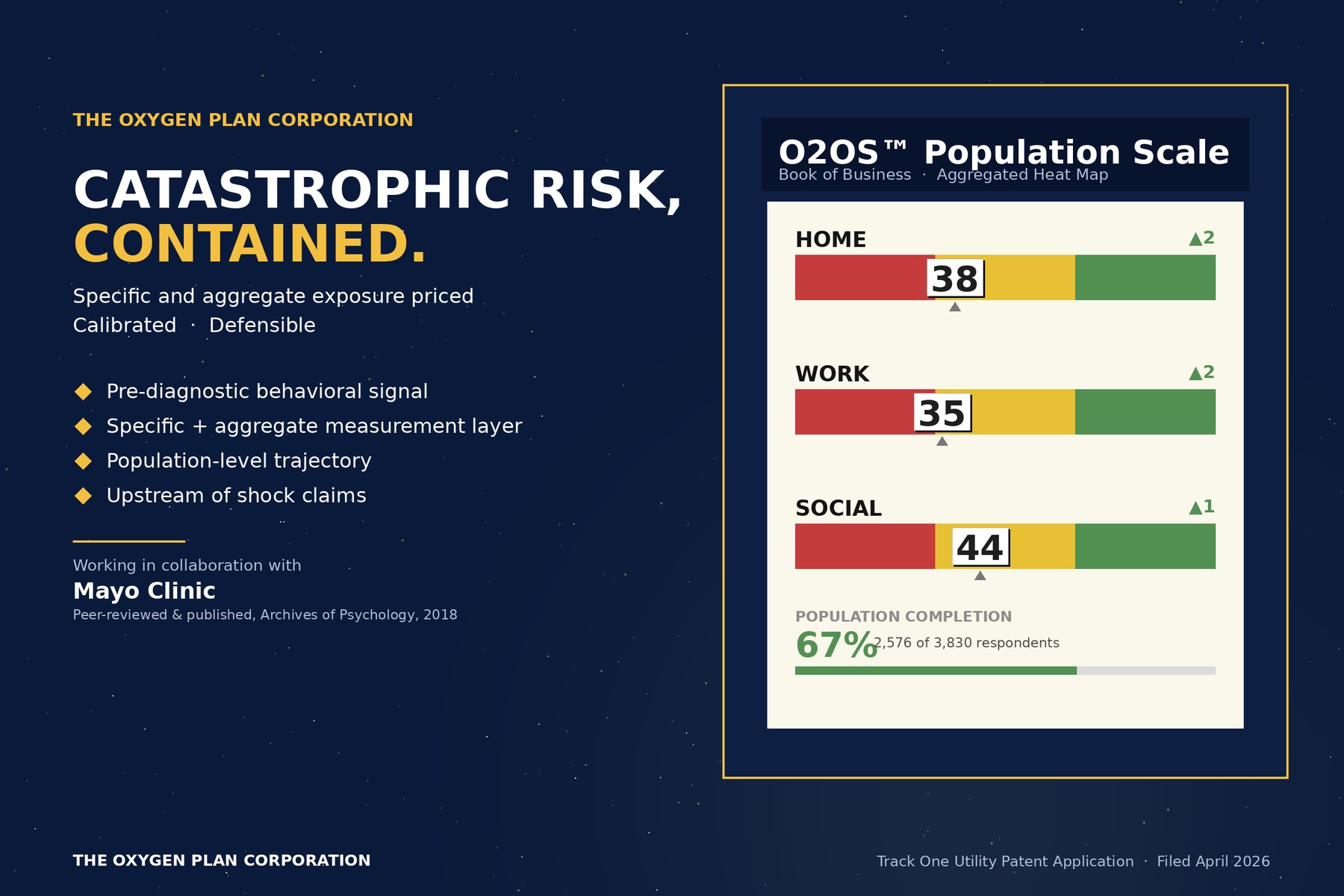
Aggregate stop-loss pricing depends on accurate population-level behavioral risk modeling. The substrate provides the upstream input current pricing models structurally lack.
Life Insurance
07
Life Insurance
Behavioral state is a documented predictor of mortality variance. Underwriting models that omit a pre-diagnostic behavioral coordinate carry systematic mispricing.
Disability Insurance
08
Disability Insurance
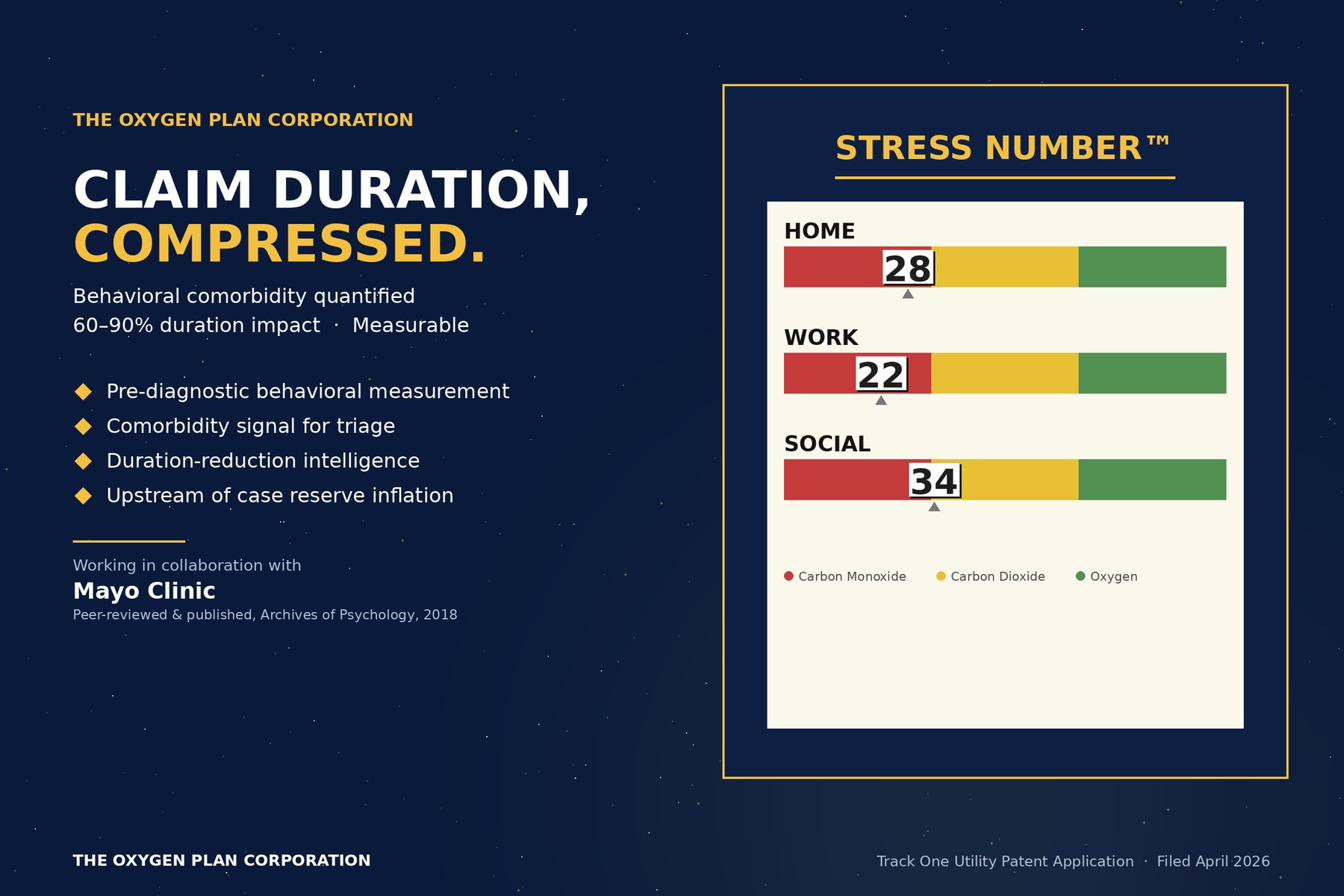
Behavioral health is the fastest-growing category of long-term disability claims. Pre-diagnostic measurement surfaces structural exposure before claim filing.
Workers' Compensation
09
Workers' Compensation
Claim duration is materially extended by undocumented behavioral comorbidity. The substrate enables intake-stage measurement before clinical adjudication.
Long-Term Care Insurance
10
Long-Term Care Insurance
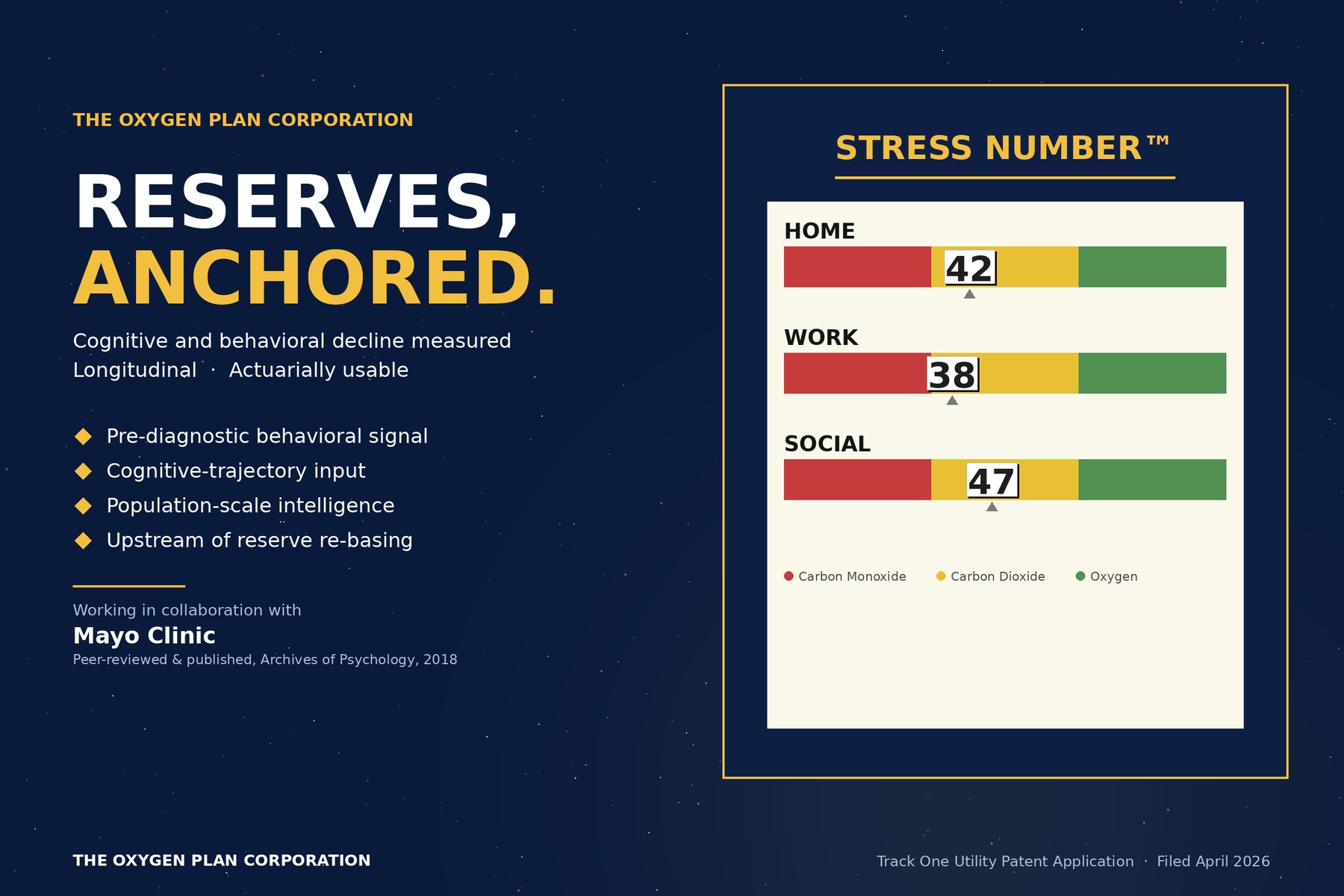
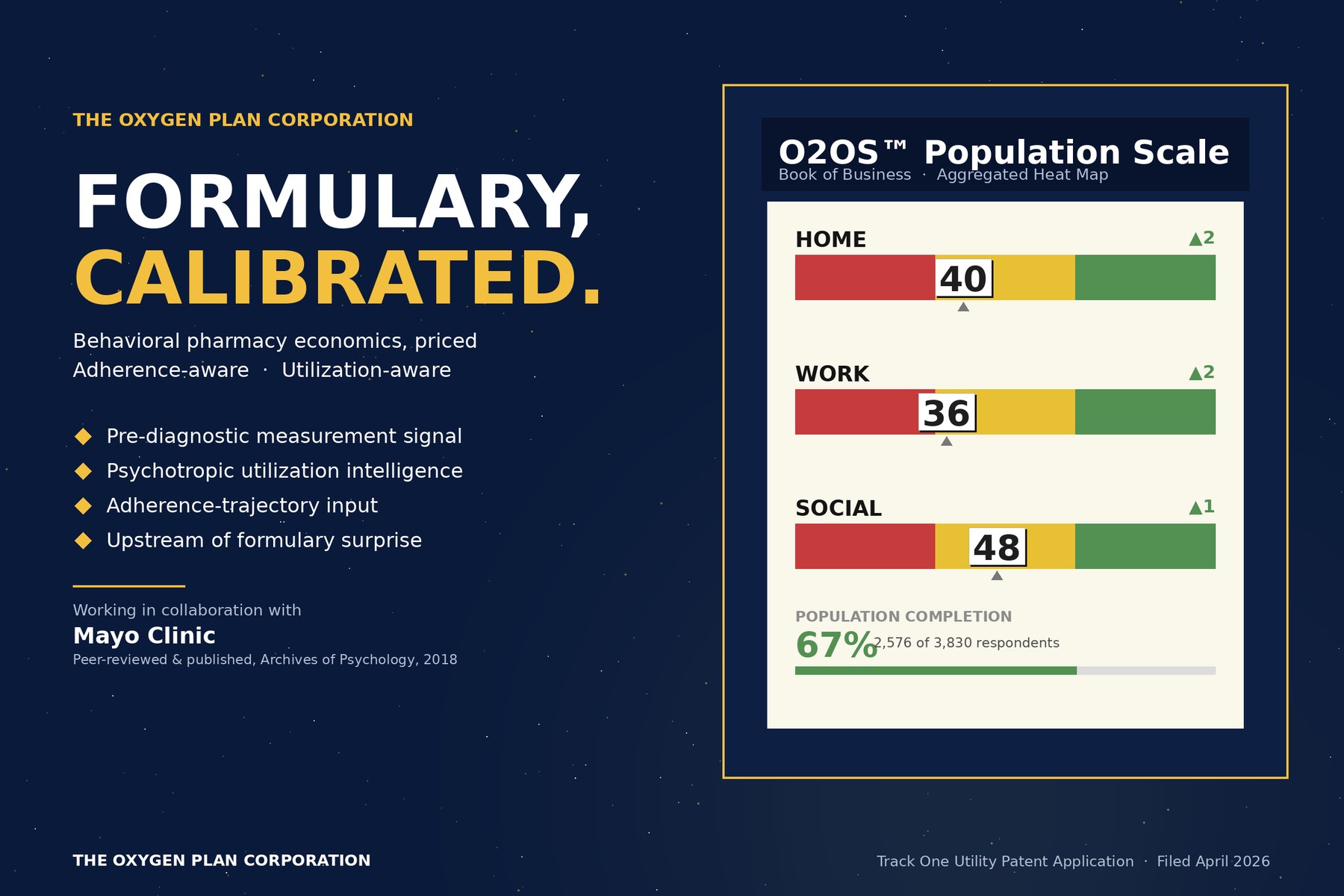
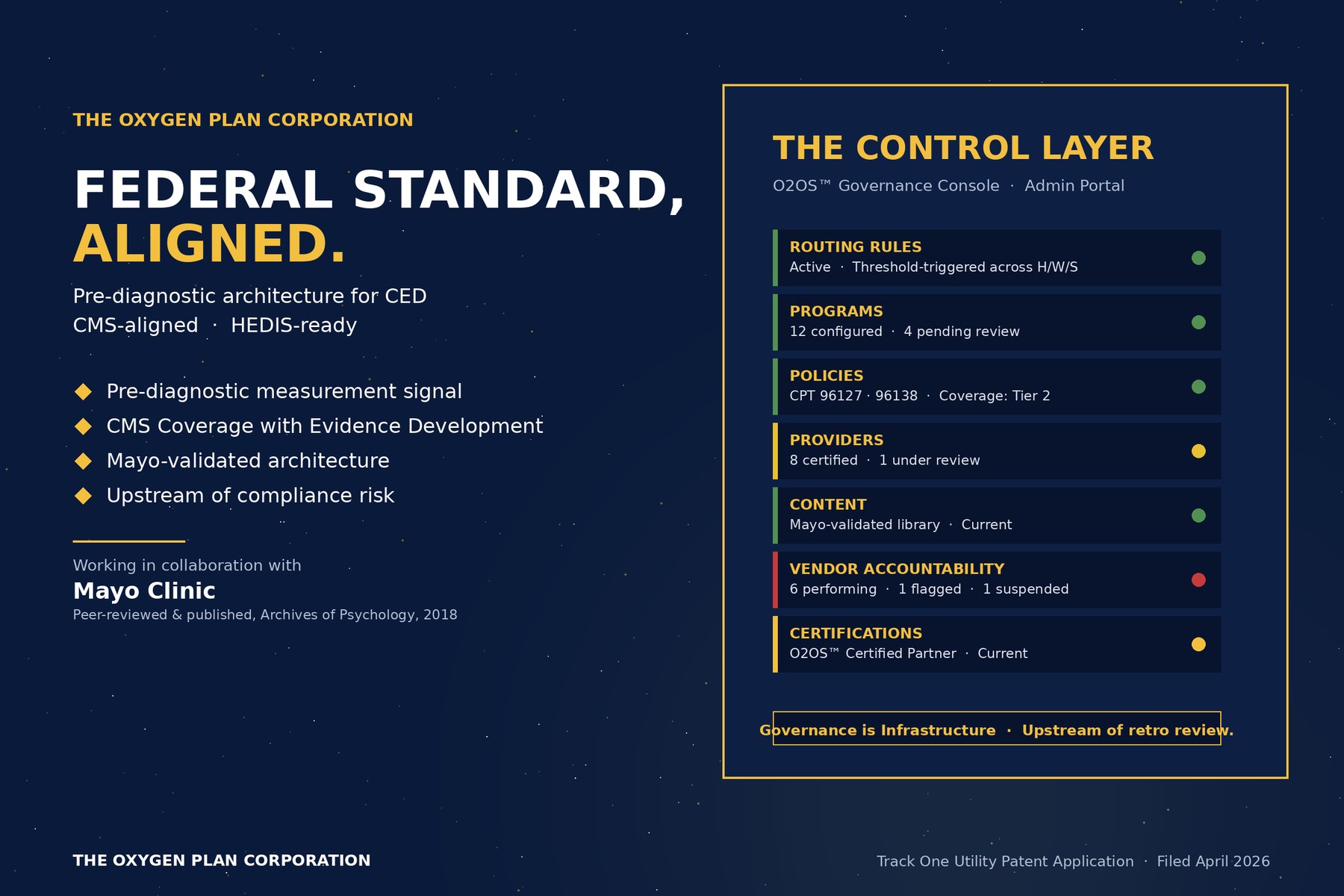
Behavioral state correlates with care utilization trajectory. Pre-diagnostic measurement informs reserve adequacy and pricing tier modeling.
— Class II —
Life Sciences & Pharmacy
11 – 16
Big Pharma · Behavioral
11
Big Pharma · Behavioral
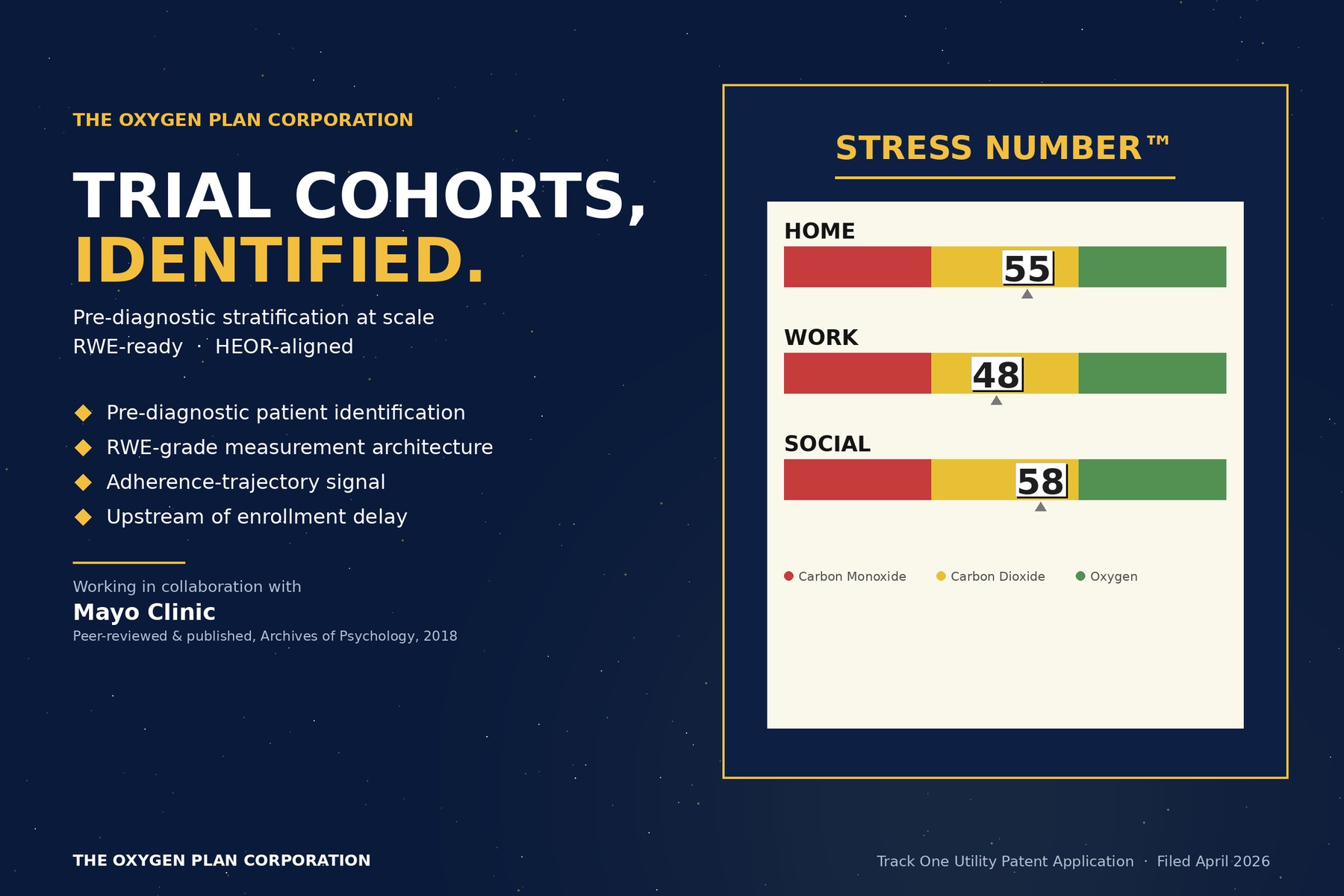
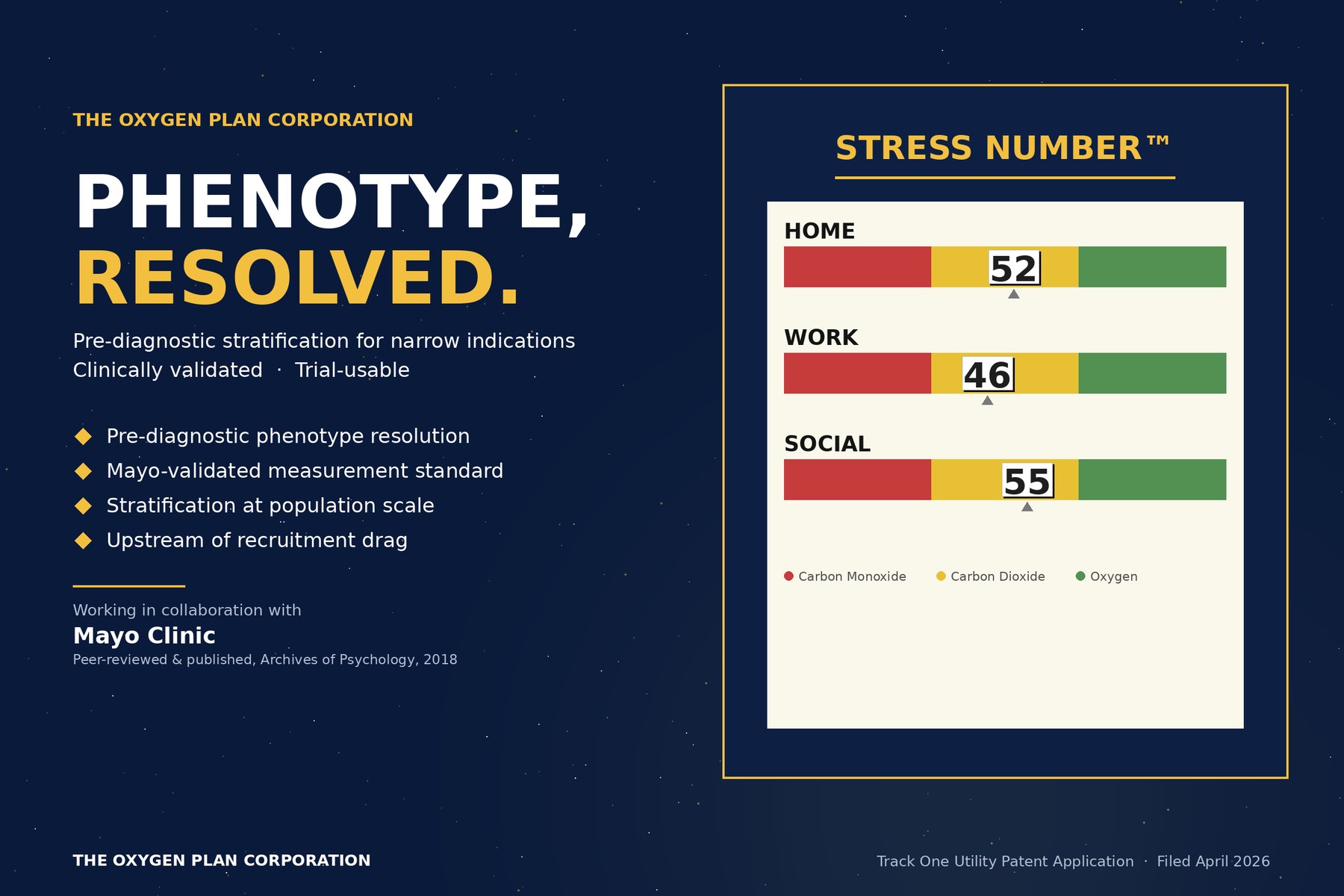
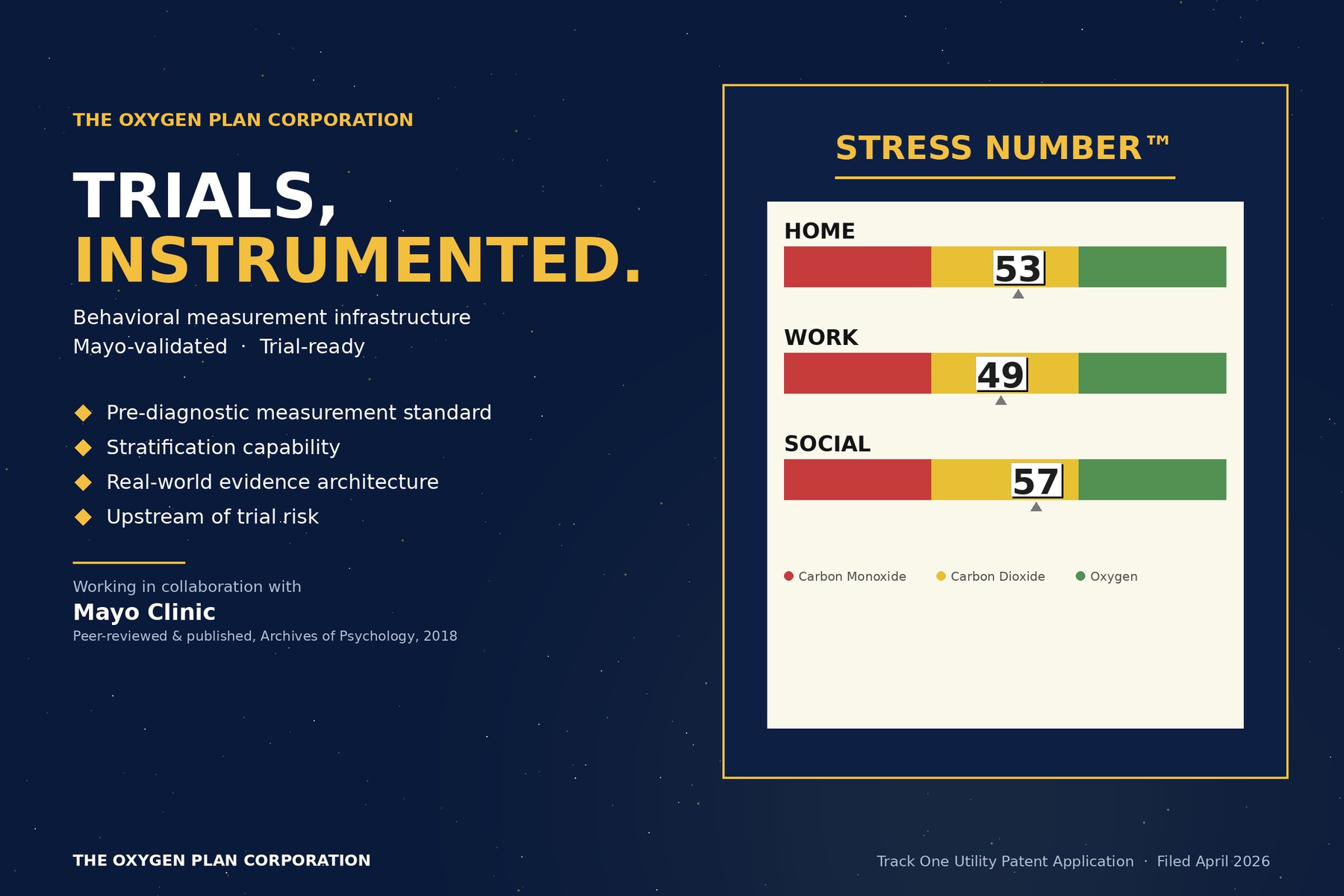
Pre-diagnostic measurement informs trial enrichment, real-world evidence generation, and behavioral comorbidity stratification across therapeutic areas.
Biotech · CNS and Mental Health
12
Biotech · CNS & Mental Health
CNS and mental health pipelines require structured upstream measurement infrastructure to define addressable populations and surface candidate cohorts.
Specialty Pharmacy
13
Specialty Pharmacy
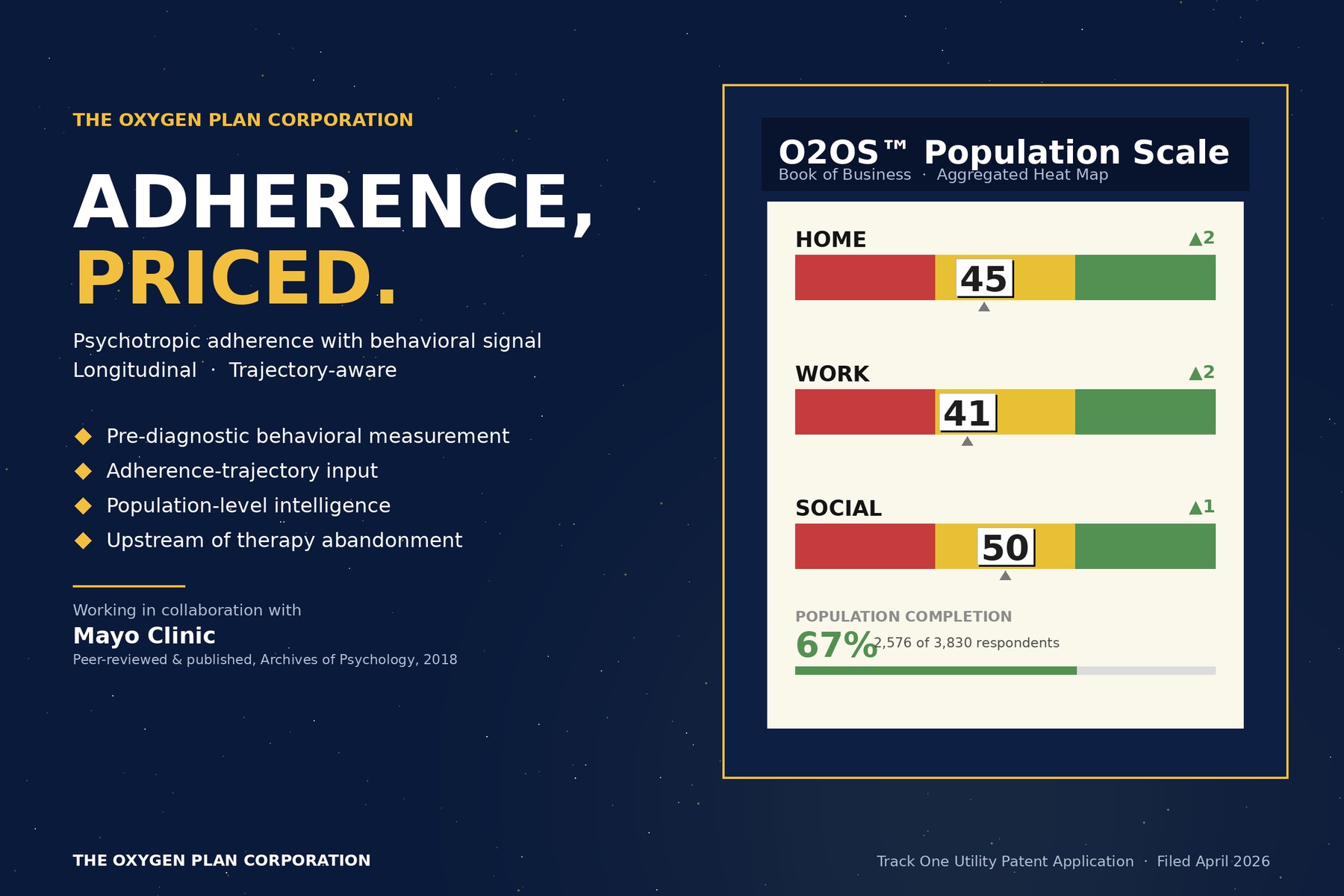
Adherence and outcomes are materially influenced by behavioral state. Pre-diagnostic measurement informs specialty-tier stratification.
Digital Therapeutics
14
Digital Therapeutics
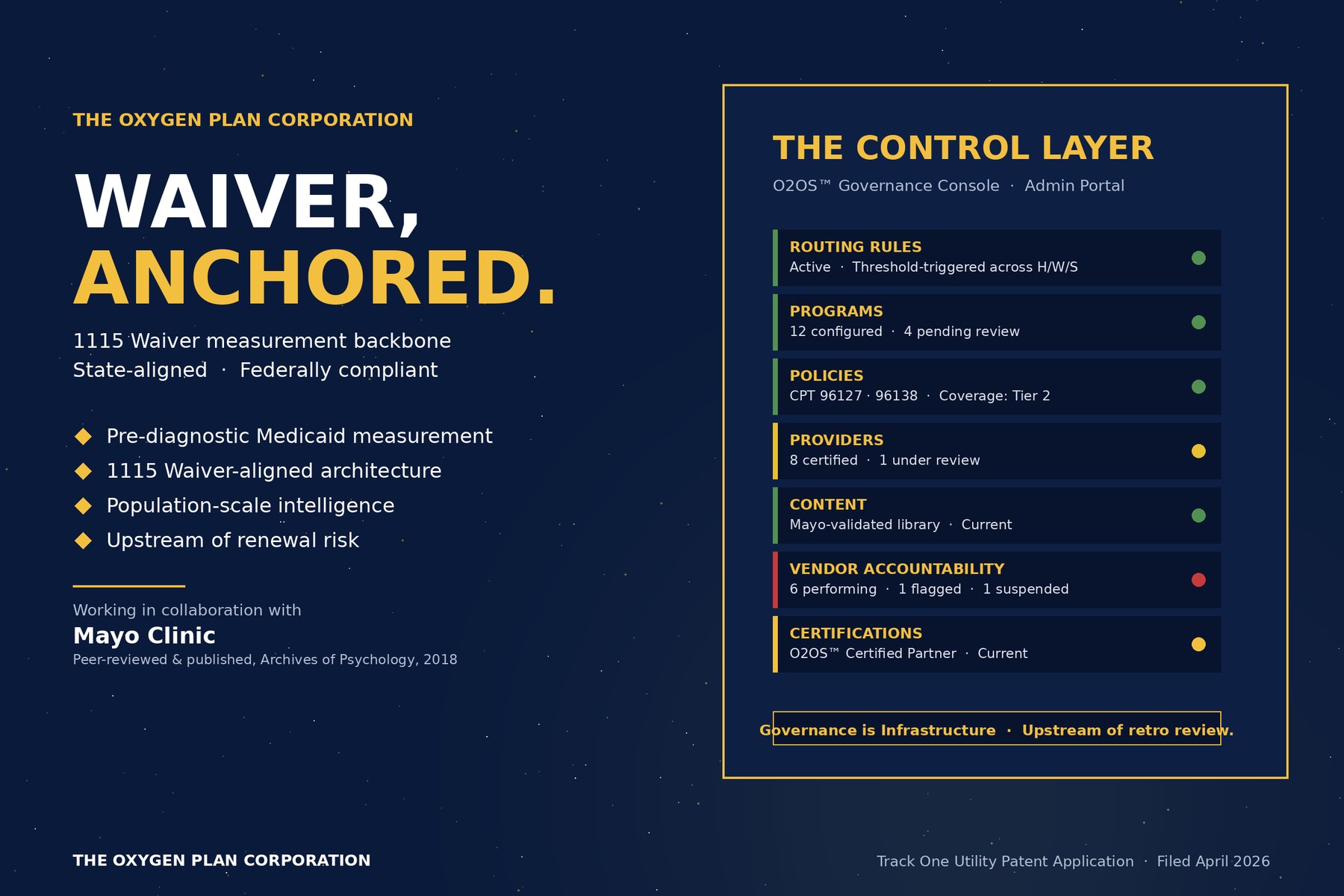
DTx outcomes require pre-engagement measurement of behavioral state. The substrate provides the upstream coordinate for cohort selection and outcomes validation.
Contract Research Organizations
15
Contract Research Organizations
CROs require population-scale behavioral measurement infrastructure for trial recruitment, stratification, and real-world evidence generation.
Pharmacy Benefit Managers
16
Pharmacy Benefit Managers
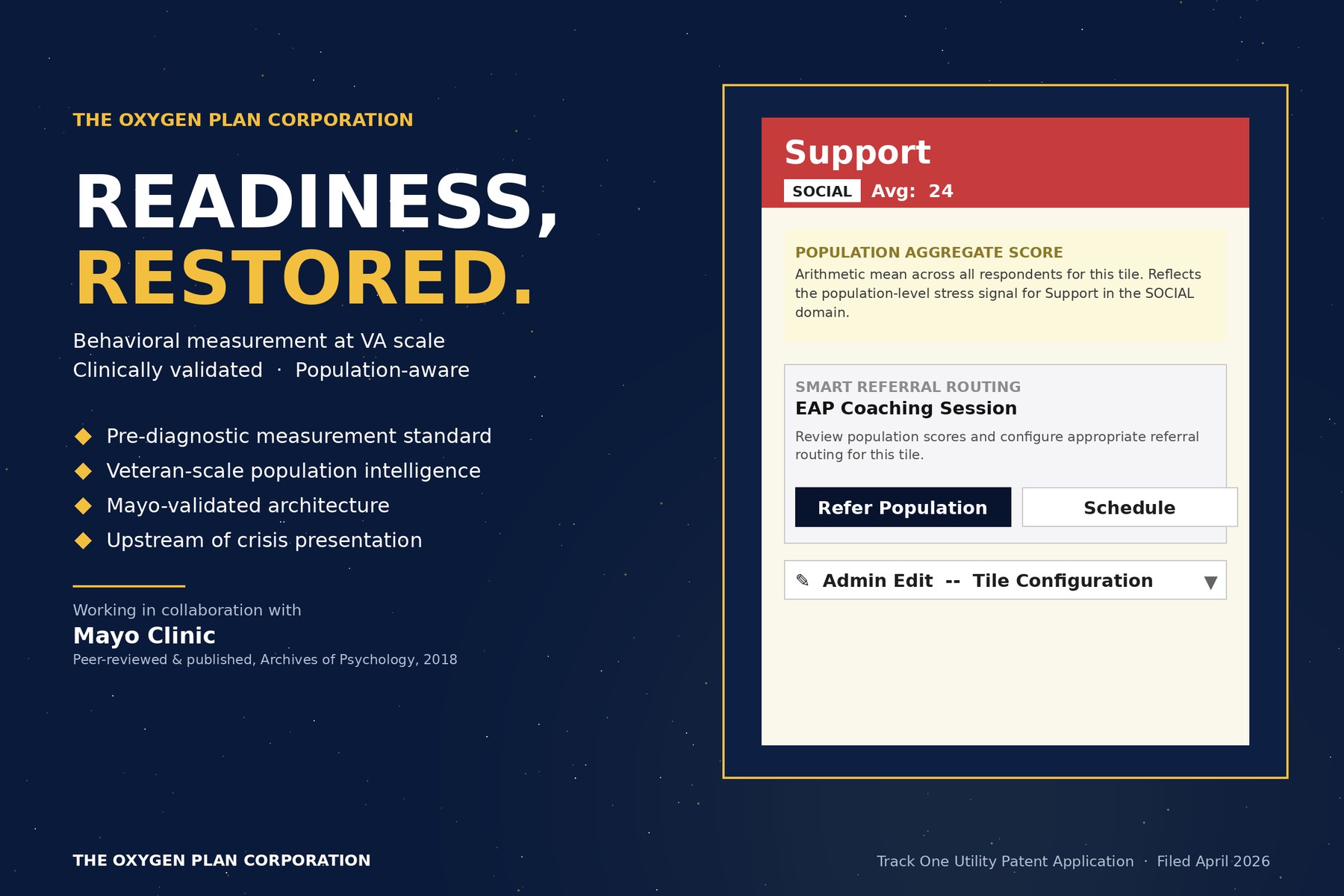
PBMs manage psychotropic prescribing across populations without upstream behavioral measurement. The substrate enables stratified formulary and clinical management decisioning.
— Class III —
Digital Health & Behavioral Surfaces
17 – 22
Digital Mental Health Platforms
17
Digital Mental Health Platforms
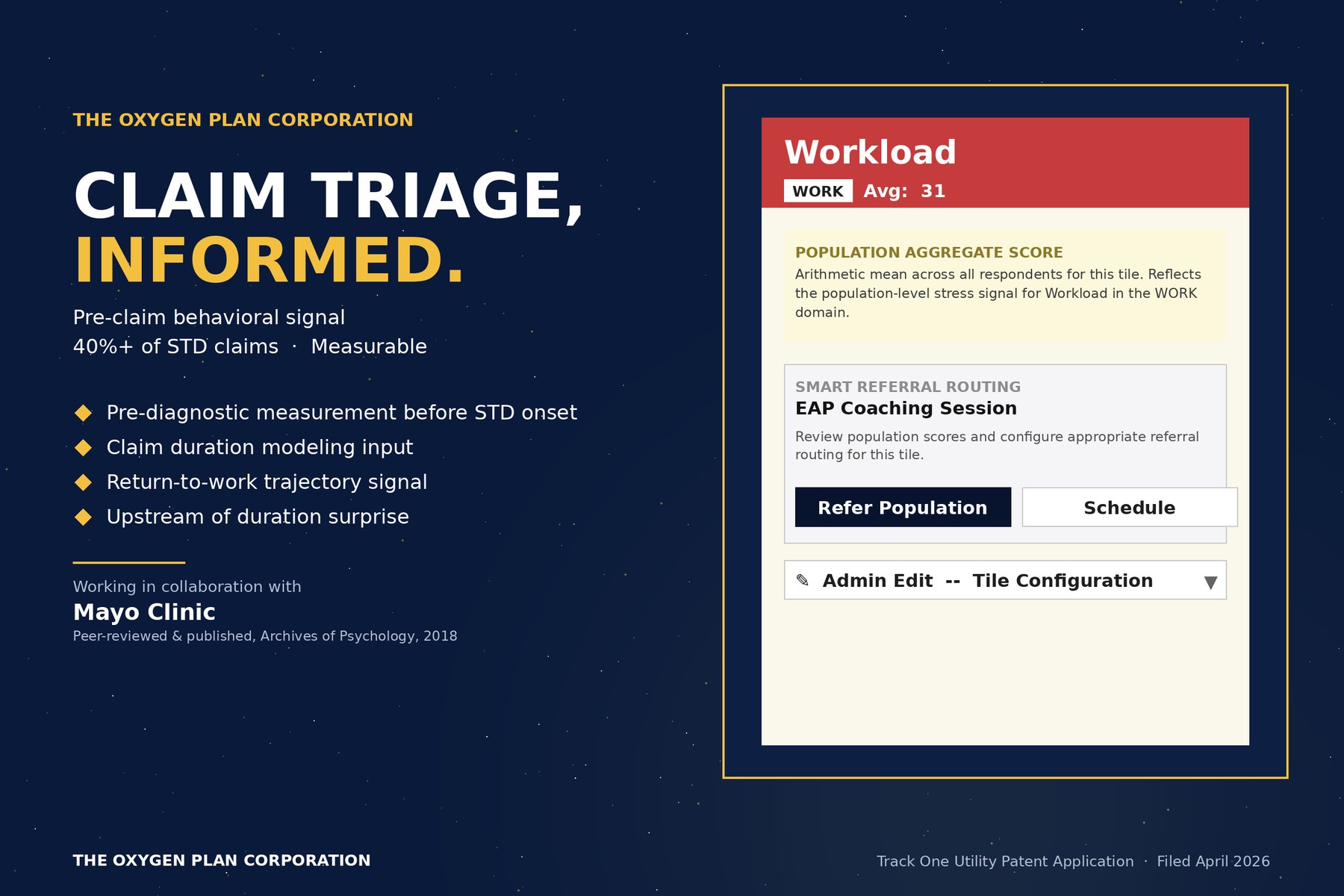
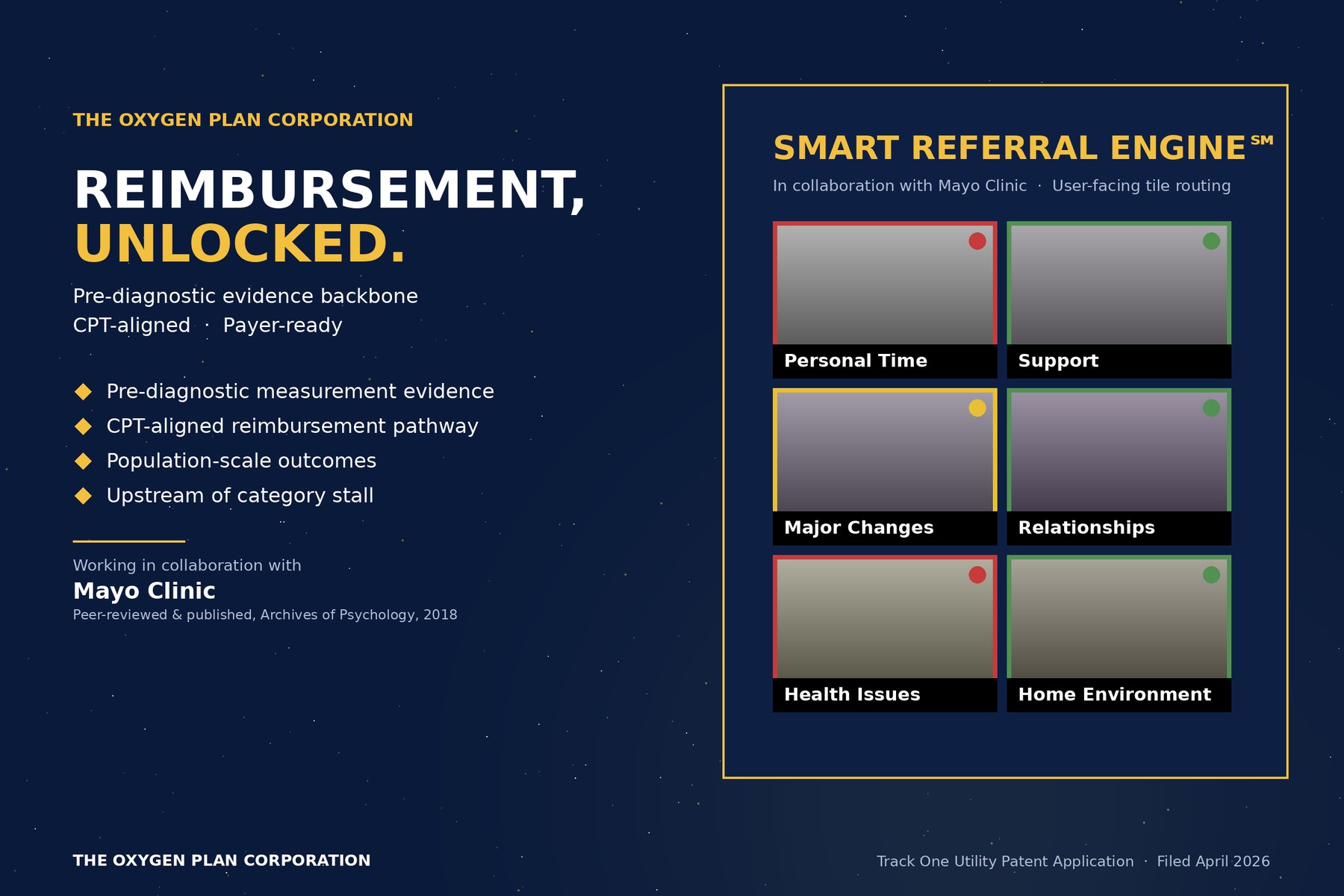
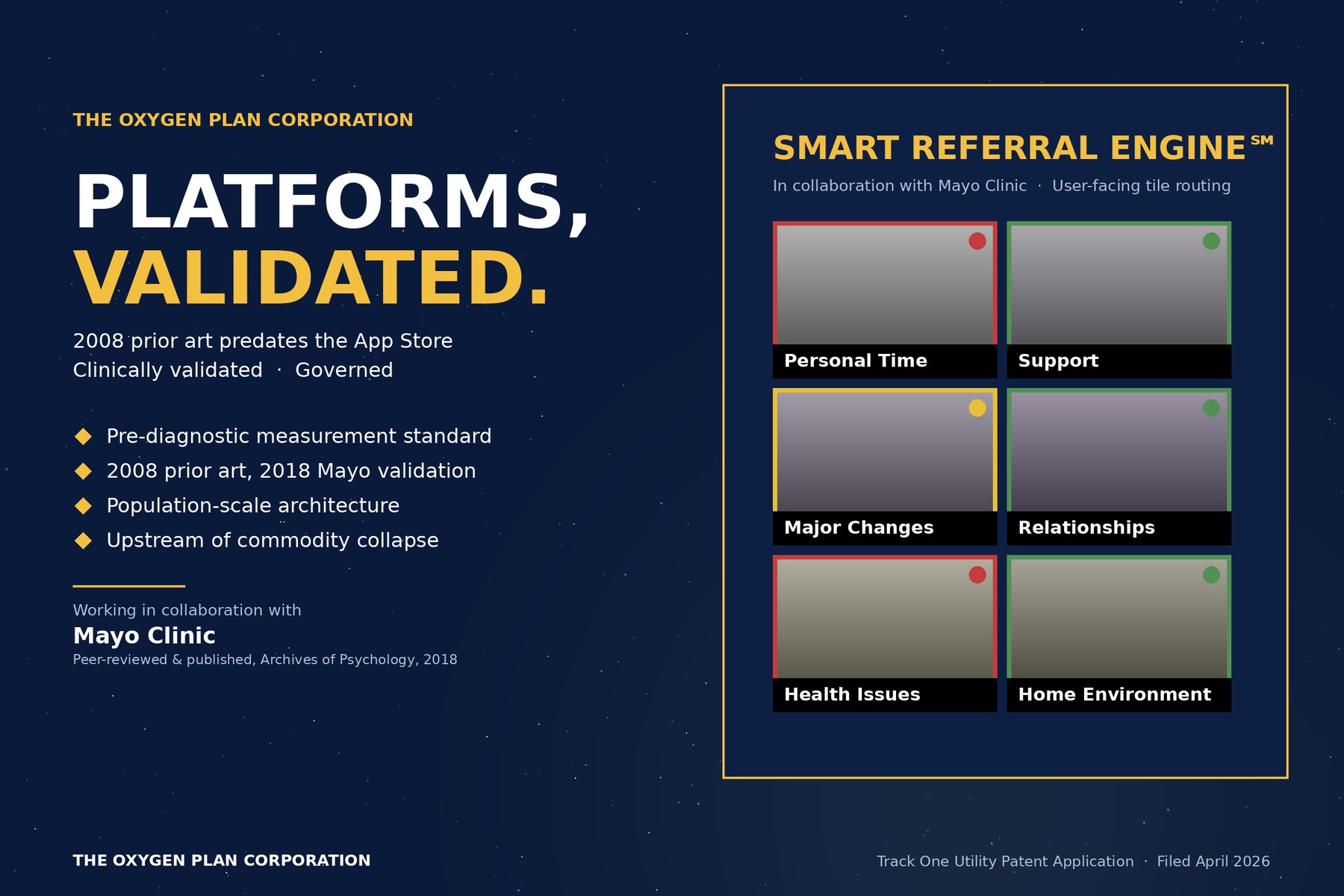
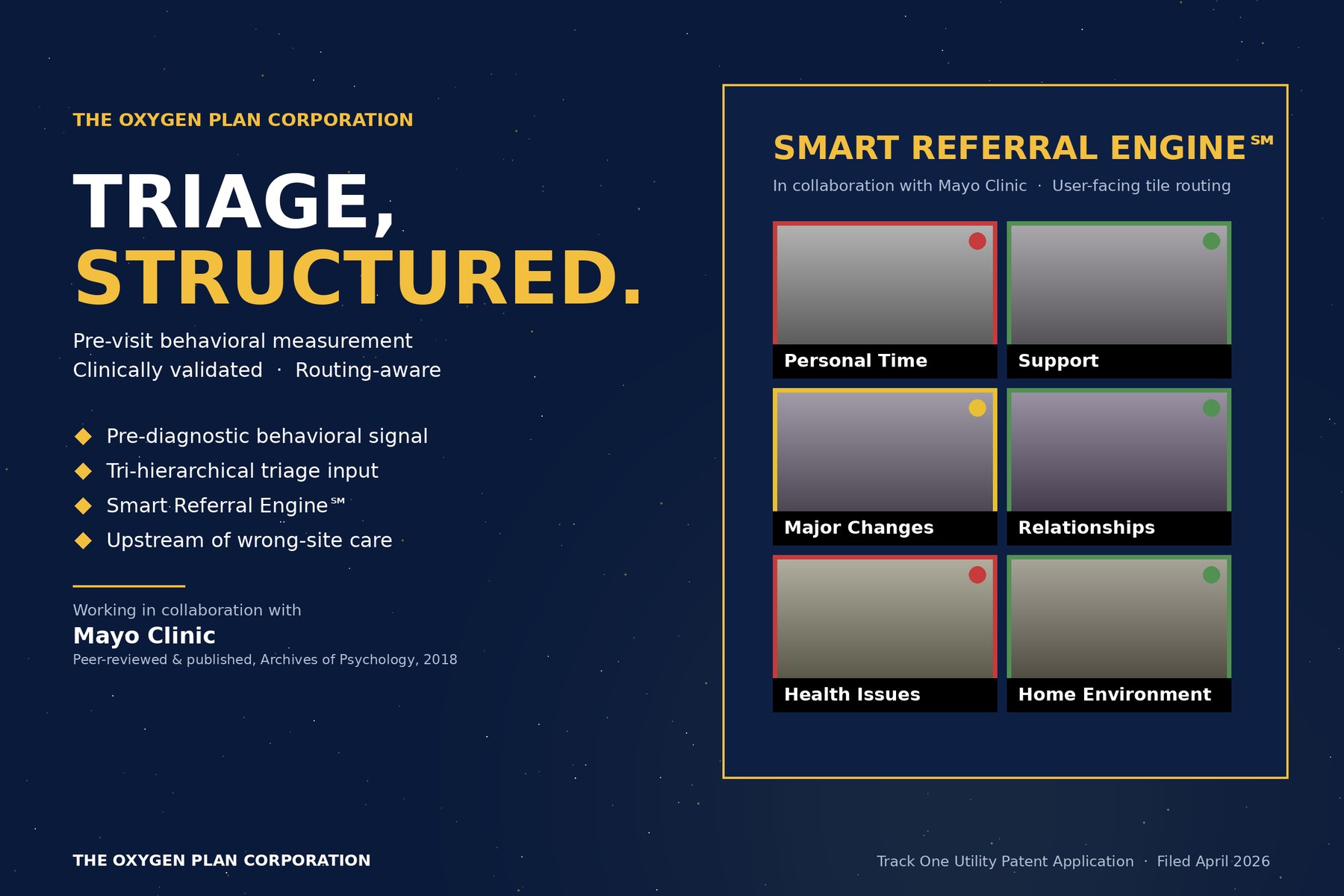
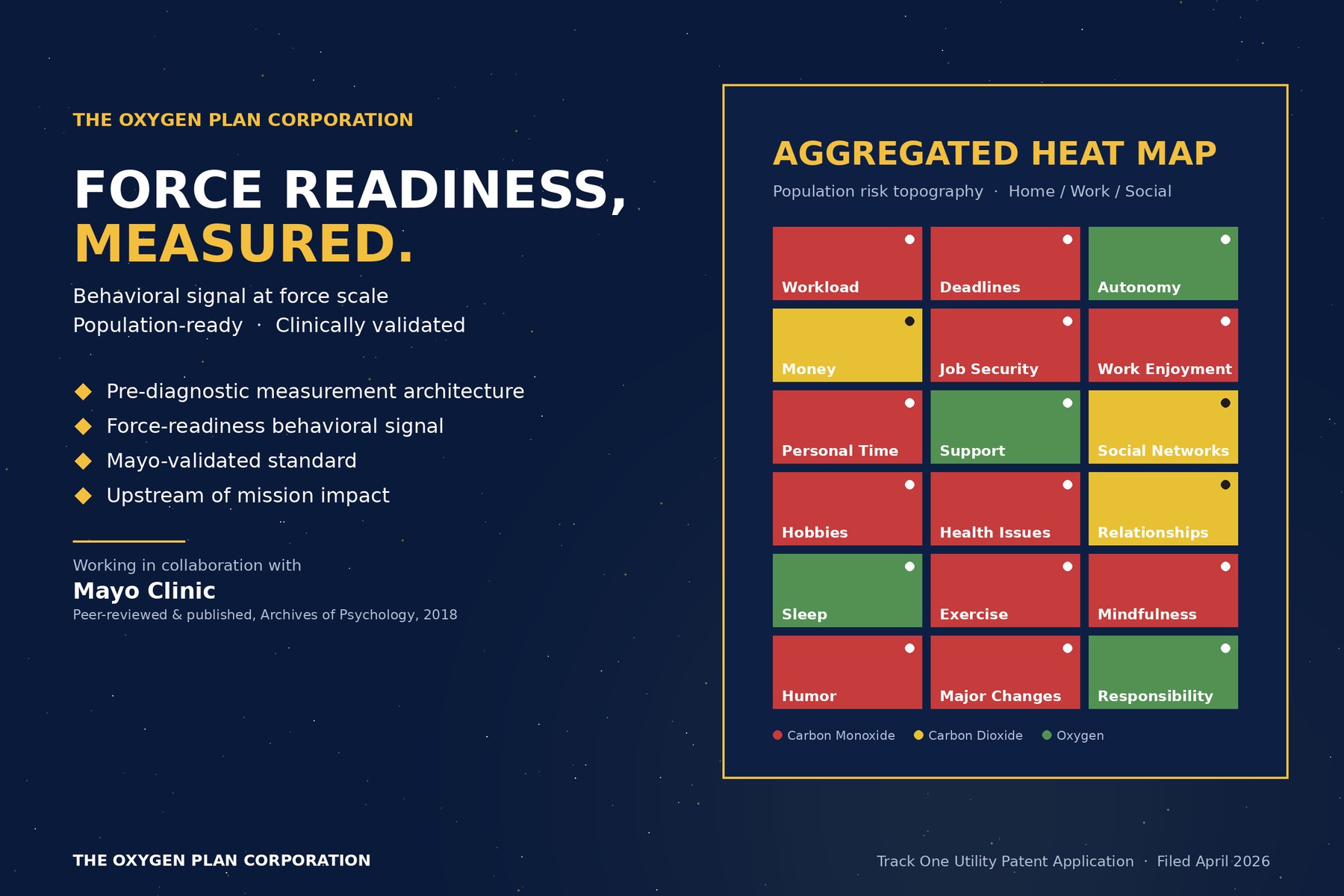
Digital mental health platforms are downstream destinations the substrate routes individuals toward. The Smart Referral Engine™ converts pre-diagnostic measurement into platform engagement.
Employer Digital Health & EAP
18
Employer Digital Health & EAP
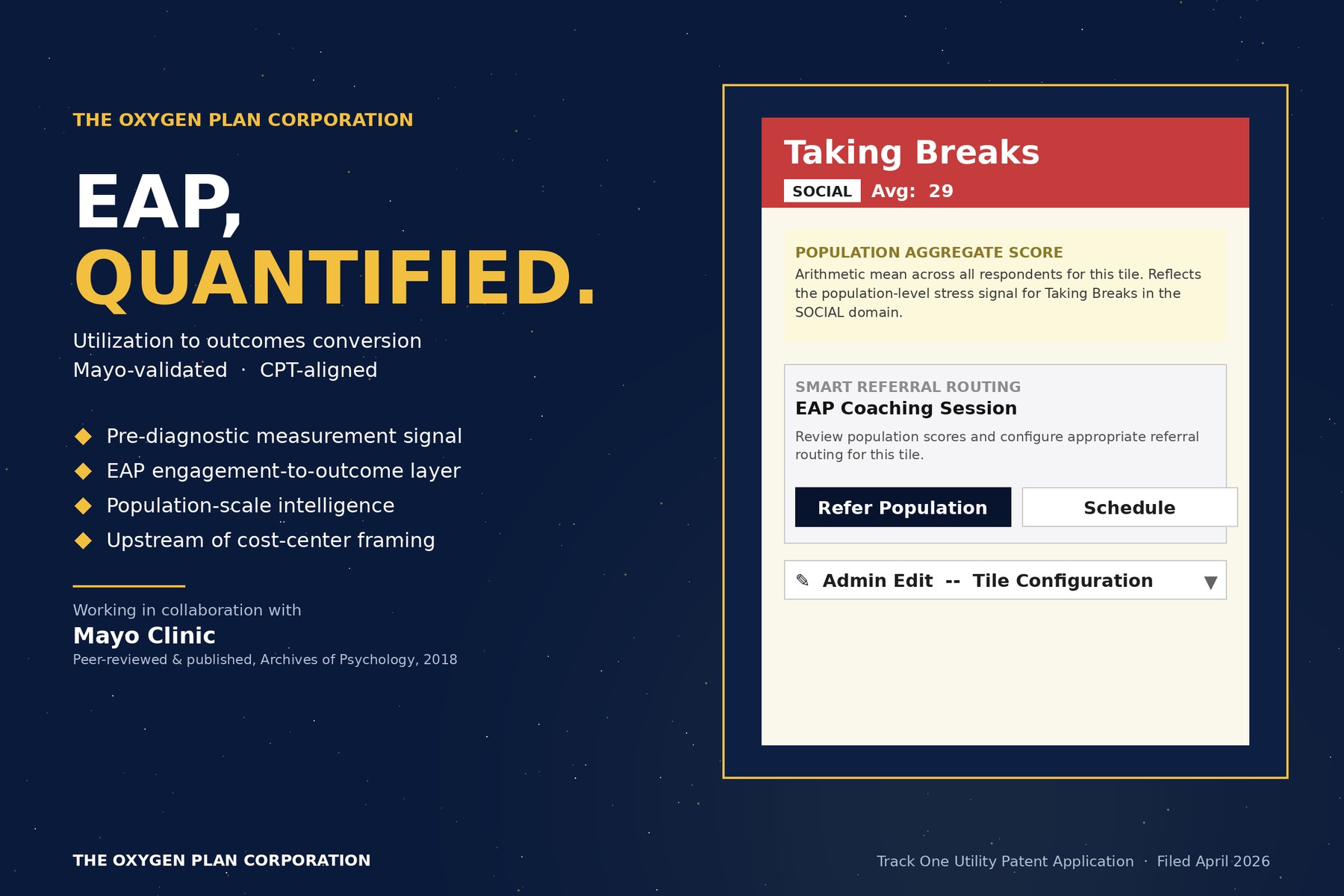
EAP utilization is gated by self-identification. Pre-diagnostic measurement surfaces structural exposure across the entire covered employee population.
Telehealth · Behavioral
19
Telehealth · Behavioral
Behavioral telehealth is a downstream routing destination. The substrate provides upstream stratification before clinical intake.
Specialty Behavioral Networks
20
Specialty Behavioral Networks
Specialty networks operate without population-scale referral architecture. The Smart Referral Engine™ provides the upstream routing layer.
Consumer Wearables and Health
21
Consumer Wearables & Health
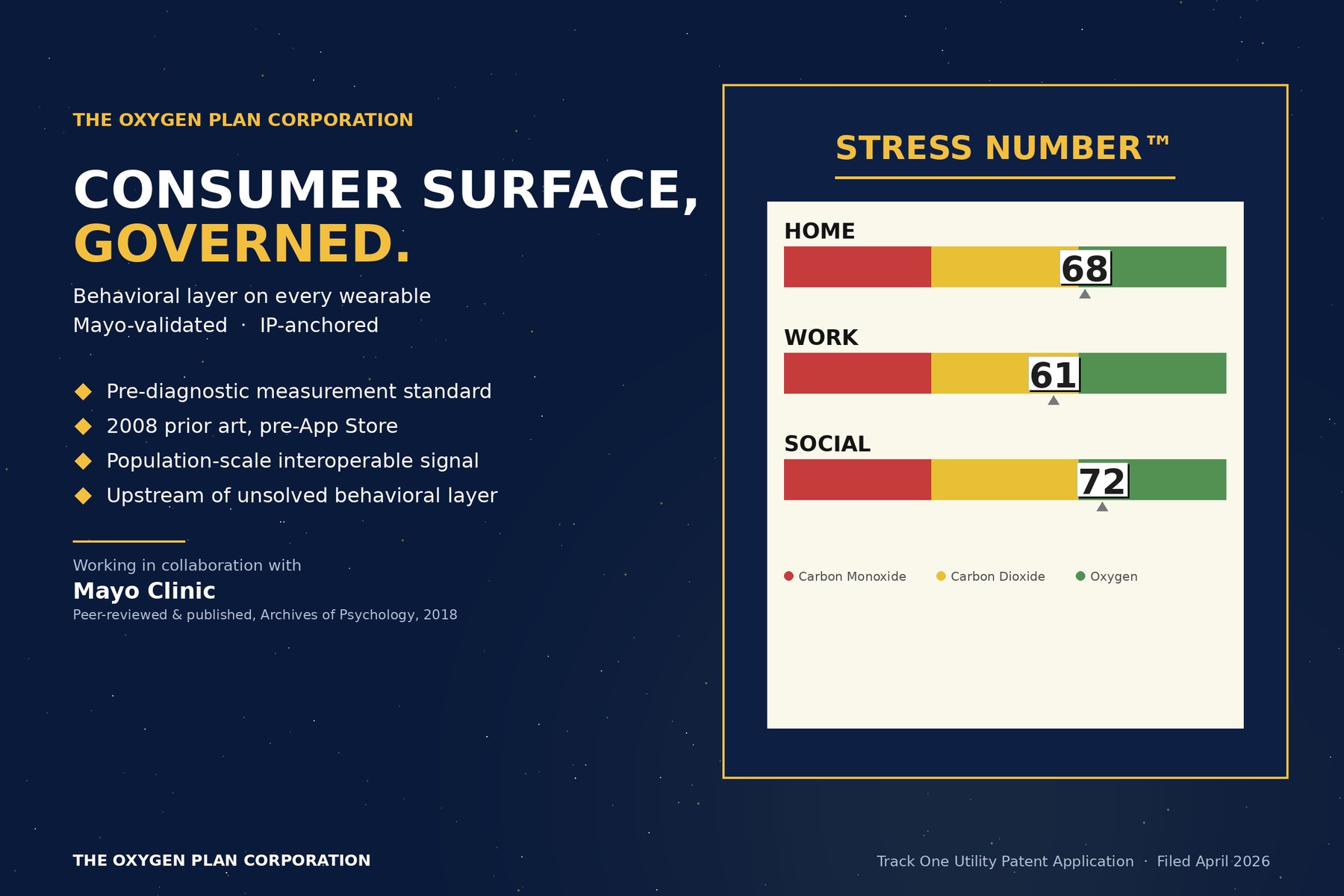
Wearable data surfaces behavioral signal without a structured measurement instrument. The substrate provides the standardized index layer for population-scale aggregation.
Remote Patient Monitoring
22
Remote Patient Monitoring
RPM platforms capture physiological data without an integrated behavioral measurement layer. The substrate supplies the upstream coordinate.
— Class IV —
Health IT & Data Infrastructure
23 – 28
EHR Platforms
23
EHR Platforms
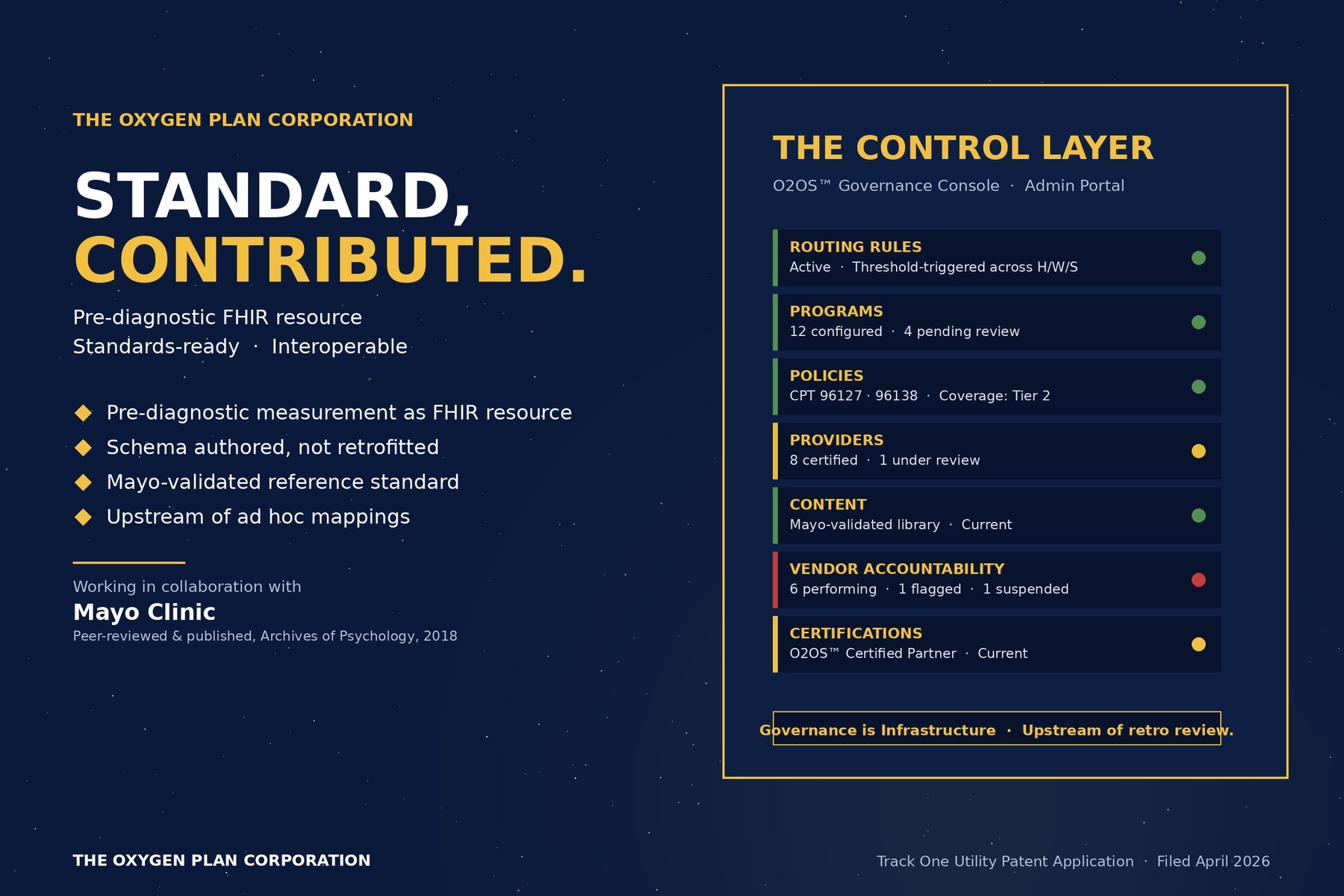
EHR vendors carry the clinical workflow but lack a pre-diagnostic measurement standard. The substrate is architected for EHR integration via standards-compliant interfaces.
Health Data & Claims Analytics
24
Health Data & Claims Analytics
Claims analytics surfaces lagging indicators of behavioral exposure. The substrate provides the upstream leading indicator that converts to the claims signal downstream.
Diagnostics and Labs
25
Diagnostics & Labs
Diagnostic infrastructure operates downstream of behavioral state. Pre-diagnostic measurement informs ordering, interpretation, and comorbidity stratification.
Revenue Cycle Management
26
Revenue Cycle Management
RCM platforms operate post-encounter. The substrate informs pre-encounter stratification, behavioral coding alignment, and CPT 96127/96138 workflow integration.
Interoperability and FHIR
27
Interoperability & FHIR
CMS-0057-F mandates real-time interoperability without specifying the behavioral measurement substrate. The corpus is architected for standards-compliant integration.
Clinical Decision Support
28
Clinical Decision Support
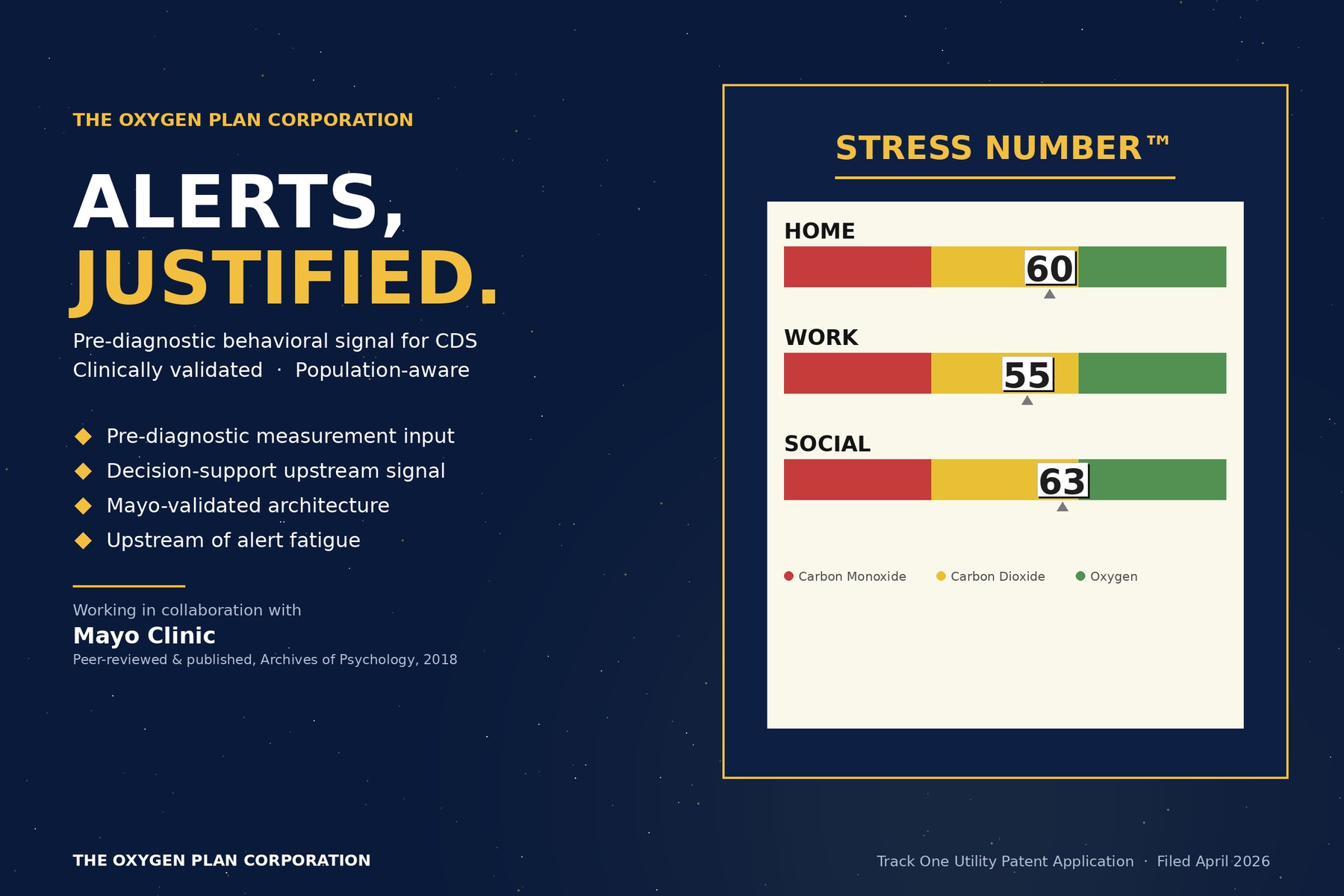
CDS systems operate without an upstream behavioral coordinate. The substrate provides the pre-diagnostic index that informs intervention timing and routing.
— Class V —
Provider & Delivery Systems
29 – 34
Academic Medical Centers
29
Academic Medical Centers
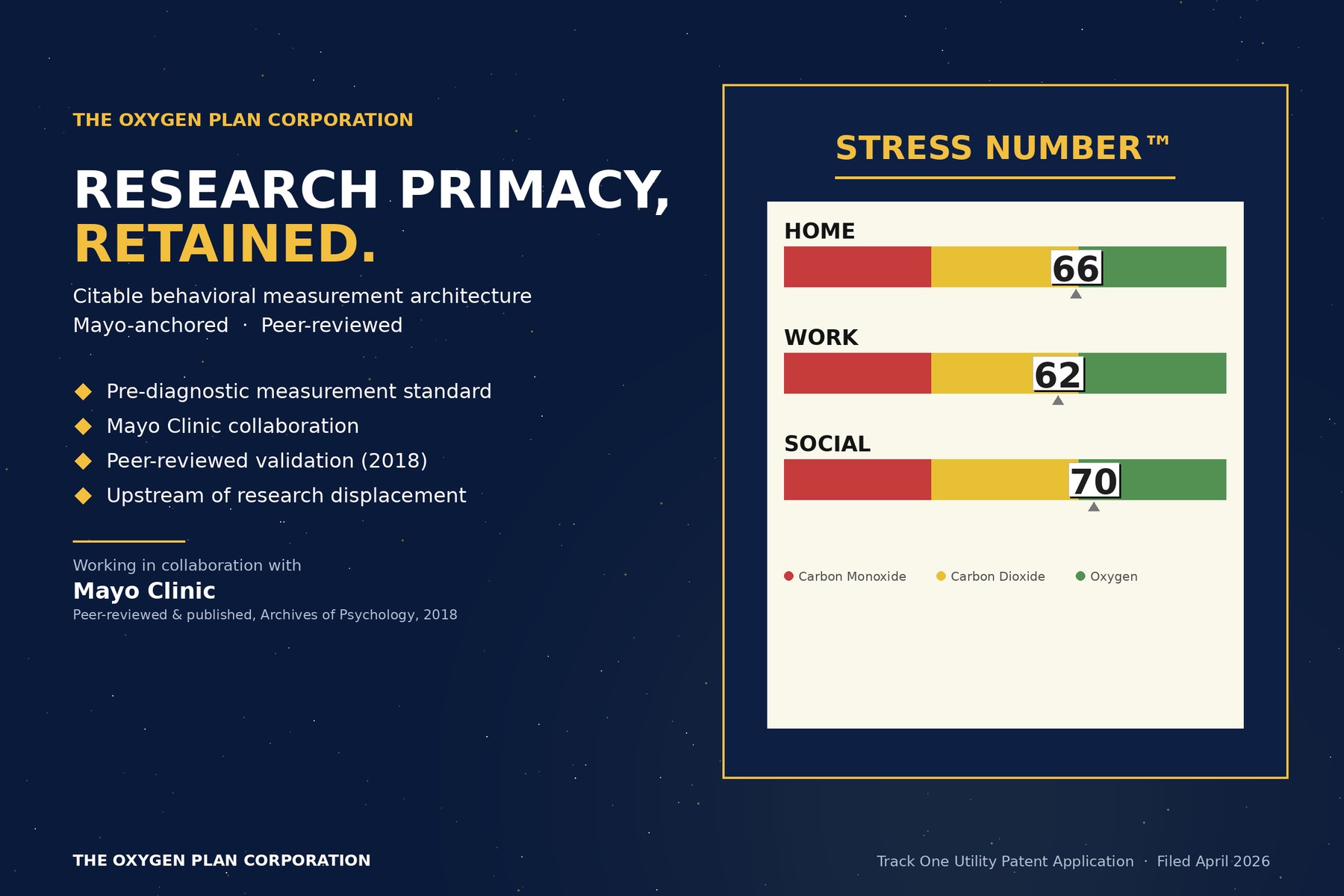
AMCs require population-scale behavioral research infrastructure. The substrate provides the standardized measurement layer for translational research.
Integrated Health Systems
30
Integrated Health Systems
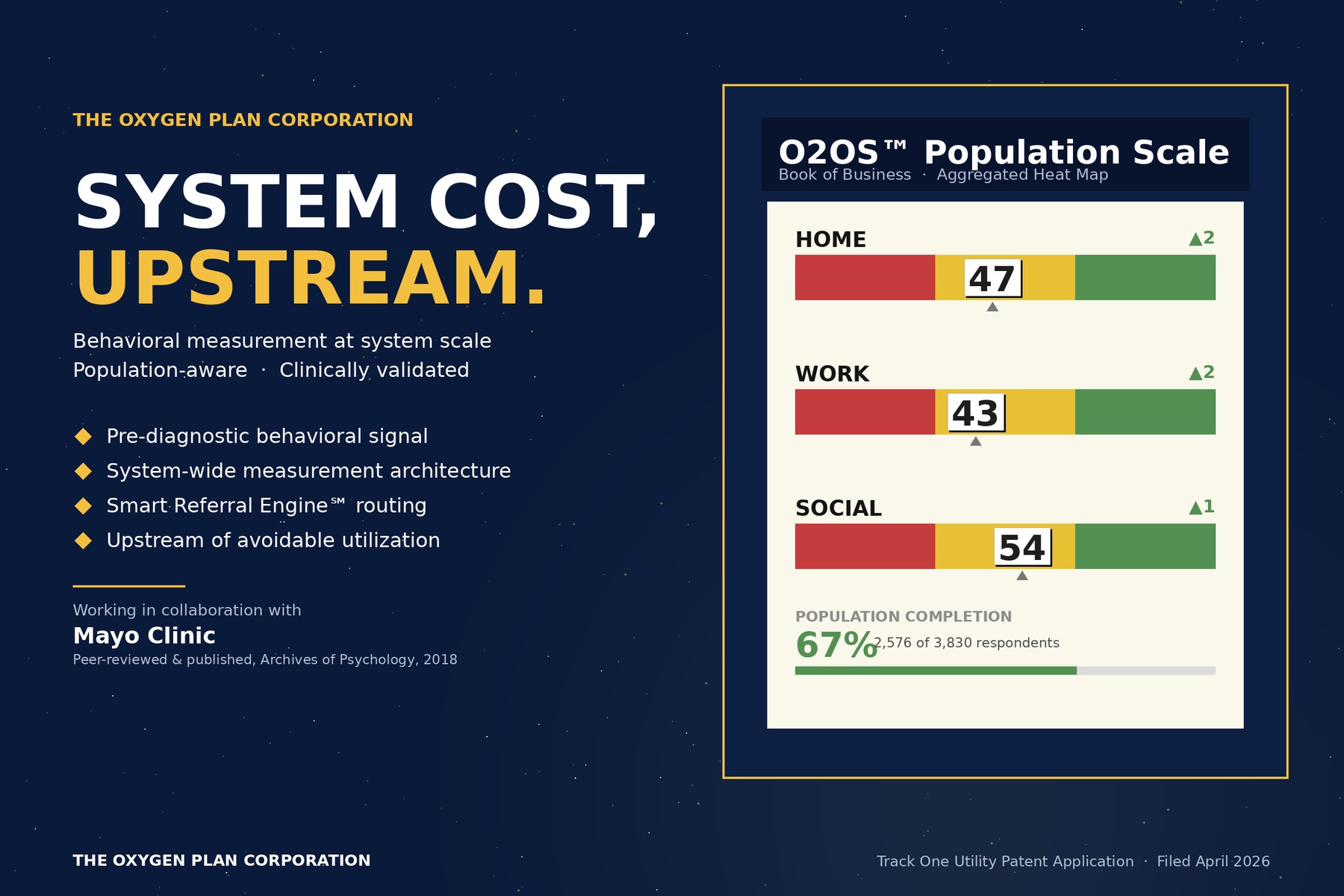
Integrated systems carry both delivery and insurance risk. Pre-diagnostic measurement informs total-cost-of-care stratification across the system's attributed populations.
Population Health · ACOs
31
Population Health · ACOs
ACOs are accountable for total cost of care without a behavioral measurement substrate. Pre-diagnostic stratification informs care management resource allocation.
FQHCs and Community Health
32
FQHCs & Community Health
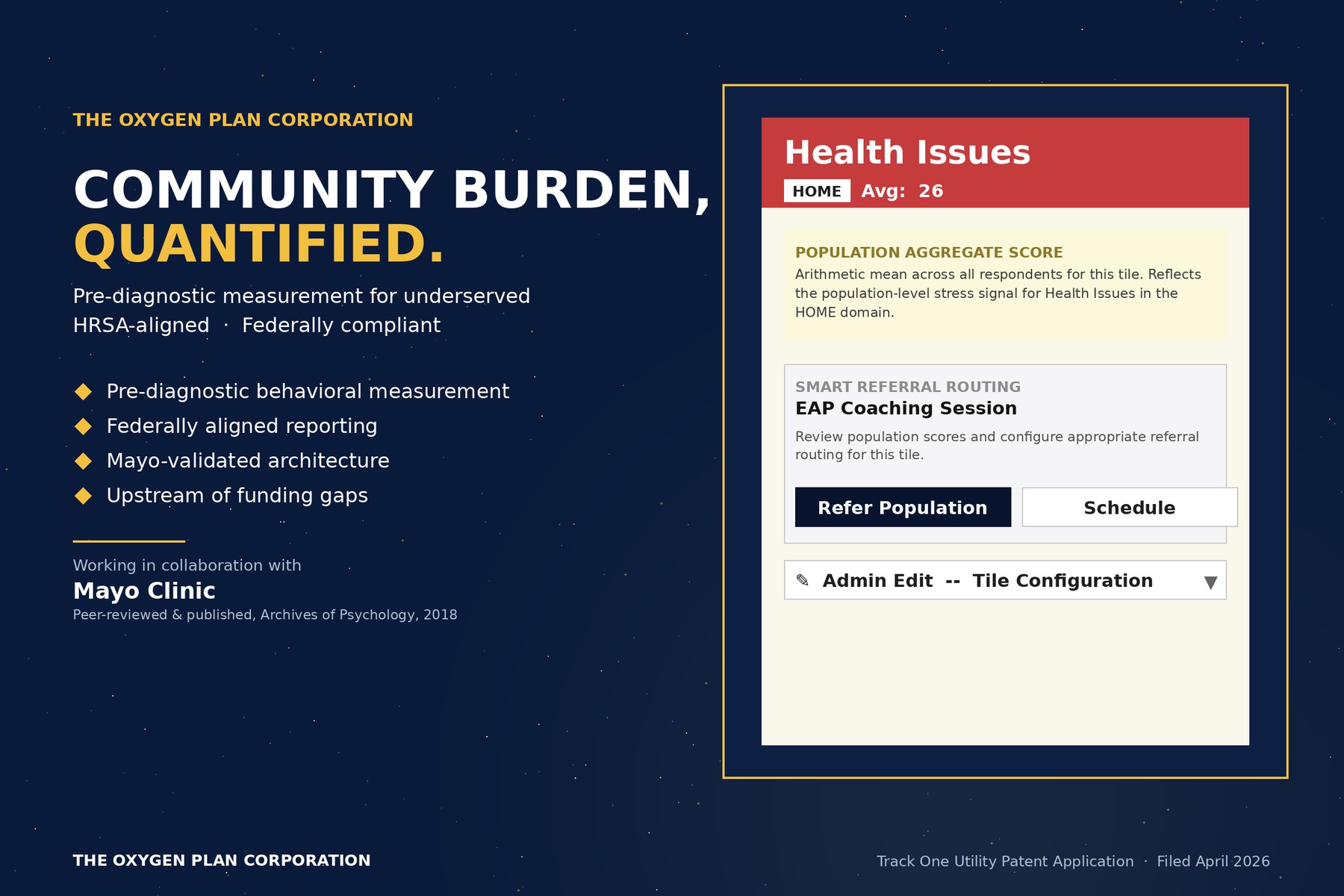
FQHCs serve high-behavioral-exposure populations under HRSA reporting requirements. The substrate provides the standardized measurement infrastructure for population-level reporting.
Primary Care Consolidators
33
Primary Care Consolidators
Consolidator economics depend on accurate population stratification. Pre-diagnostic measurement informs panel design, capitation pricing, and care management deployment.
Urgent Care and Retail Clinics
34
Urgent Care & Retail Clinics
High-volume episodic care environments lack upstream behavioral measurement. The substrate enables intake-stage stratification at the point of patient interaction.
— Class VI —
Public & Government Sectors
35 – 40
CMS-Facing Contractors
35
CMS-Facing Contractors
CMS contractor performance is increasingly tied to behavioral health outcome metrics. The substrate provides the measurement infrastructure for contract performance reporting.
State Medicaid Agencies
36
State Medicaid Agencies
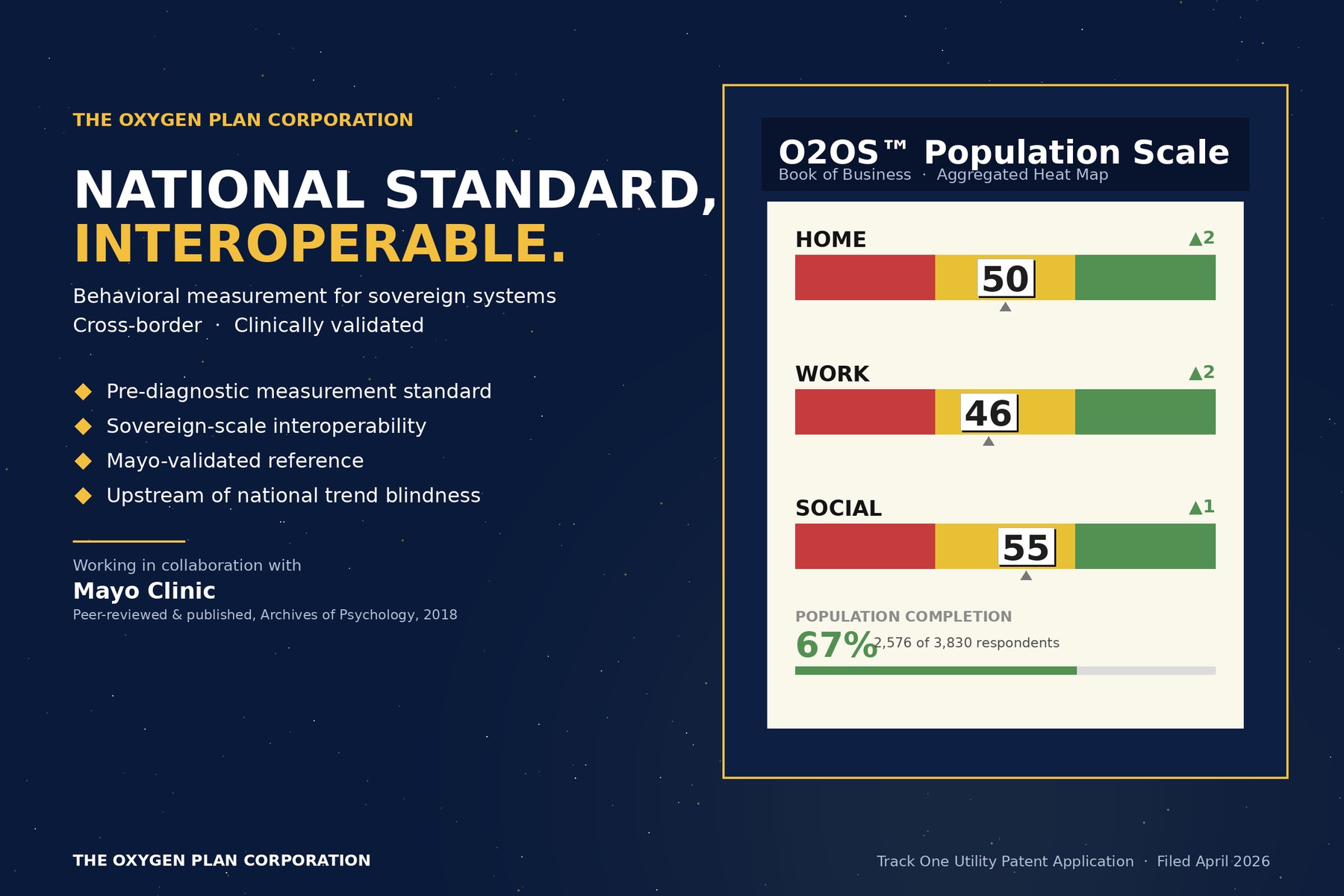
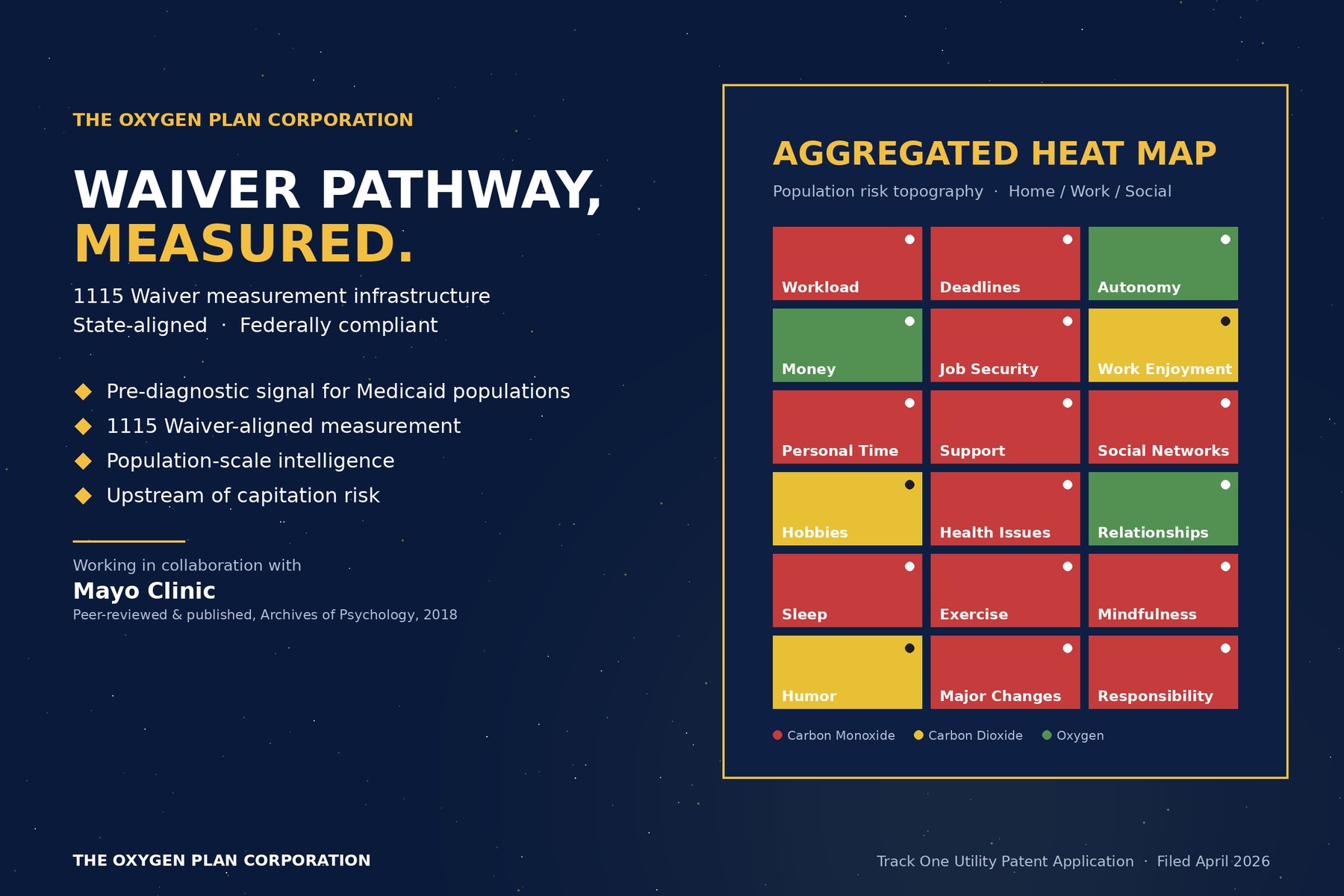
State agencies administer 1115 waivers and managed care contracts without a uniform behavioral measurement standard. The substrate enables interstate comparability and audit alignment.
State Behavioral Health Authorities
37
State Behavioral Health Authorities
State BH authorities manage block grant deployment and outcome reporting. The substrate provides the standardized measurement infrastructure for population-level reporting to SAMHSA.
Veterans Health Administration
38
Veterans Health Administration
VHA carries one of the highest behavioral comorbidity burdens of any health system. Pre-diagnostic measurement informs cross-service population stratification.
Military Health · TRICARE
39
Military Health · TRICARE
TRICARE covers service members, retirees, and dependents across deployment cycles. The substrate provides the cross-population behavioral coordinate the system structurally lacks.
Corrections Health Contractors
40
Corrections Health Contractors
Corrections health systems serve populations with materially elevated behavioral comorbidity. The substrate provides intake-stage measurement aligned with NCCHC accreditation requirements.
— Class VII —
Employers, Benefits & Consulting
41 – 46
Jumbo Self-Insured Employers
41
Jumbo Self-Insured Employers
Aggregated behavioral exposure across self-insured populations exceeds the modeling capacity of any individual employer. Coordination requires a shared coordinate system.
Employer Health Coalitions
42
Employer Health Coalitions
Coalitions negotiate across employer book of business without a shared behavioral measurement standard. The substrate provides the comparability layer.
Benefits Consultants
43
Benefits Consultants
Mercer, Aon, Willis Towers Watson, and similar advisors orchestrate vendor selection across self-insured client books. The substrate provides the comparative measurement infrastructure the advisor function structurally requires.
Reinsurance Brokers
44
Reinsurance Brokers
Brokers structure treaties across ceding companies without a shared behavioral coordinate. The substrate enables comparable risk submissions across the broker's book.
Public Sector Employee Plans
45
Public Sector Employee Plans
State and municipal employee plans operate under fiduciary obligations comparable to private-sector self-insured plans. The substrate provides the auditable measurement standard.
Taft-Hartley and Union Funds
46
Taft-Hartley & Union Funds
Multiemployer funds carry trustee fiduciary obligations under ERISA. The substrate provides the auditable behavioral measurement standard for trustee documentation.
— Class VIII —
Capital & Investment
47 – 52
Healthcare Private Equity
47
Healthcare Private Equity
PE portfolios across payer, provider, and services categories carry unmodeled behavioral exposure. The substrate informs diligence, value creation, and exit valuation modeling.
Digital Health Venture Capital
48
Digital Health Venture Capital
DH VC portfolios concentrate on downstream behavioral health applications. The substrate is the upstream infrastructure those applications structurally depend on.
Healthcare Hedge Funds
49
Healthcare Hedge Funds
Long/short healthcare strategies require behavioral risk signal across public payer and services positions. The substrate provides the cross-position measurement layer.
Sovereign Wealth · Healthcare
50
Sovereign Wealth · Healthcare
SWF healthcare exposure spans payer, provider, life sciences, and infrastructure. The substrate provides the cross-vertical behavioral risk coordinate at portfolio scale.
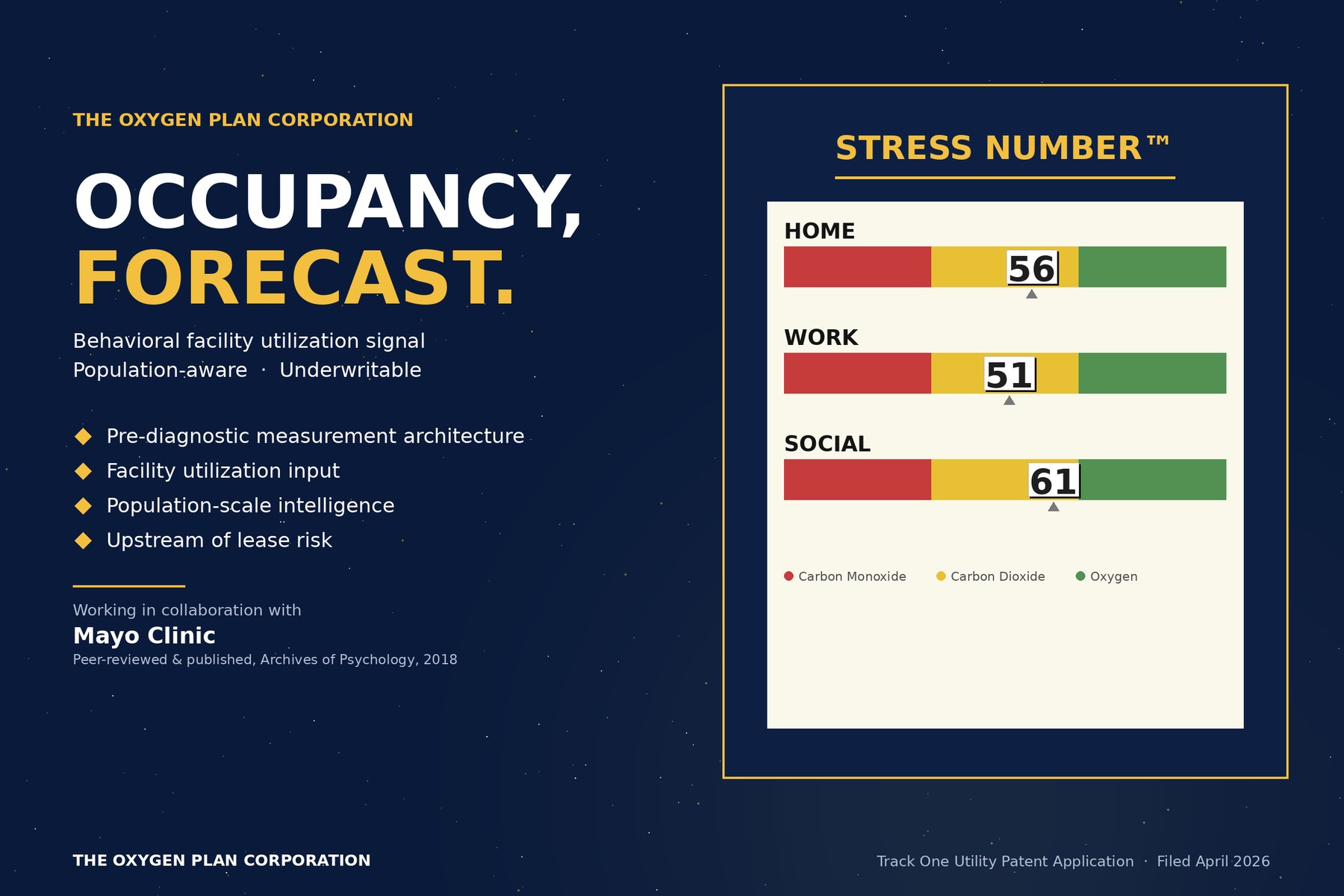
Healthcare REITs
51
Healthcare REITs
REIT property cash flows depend on operator population health performance. The substrate informs operator viability and rent coverage stress modeling.
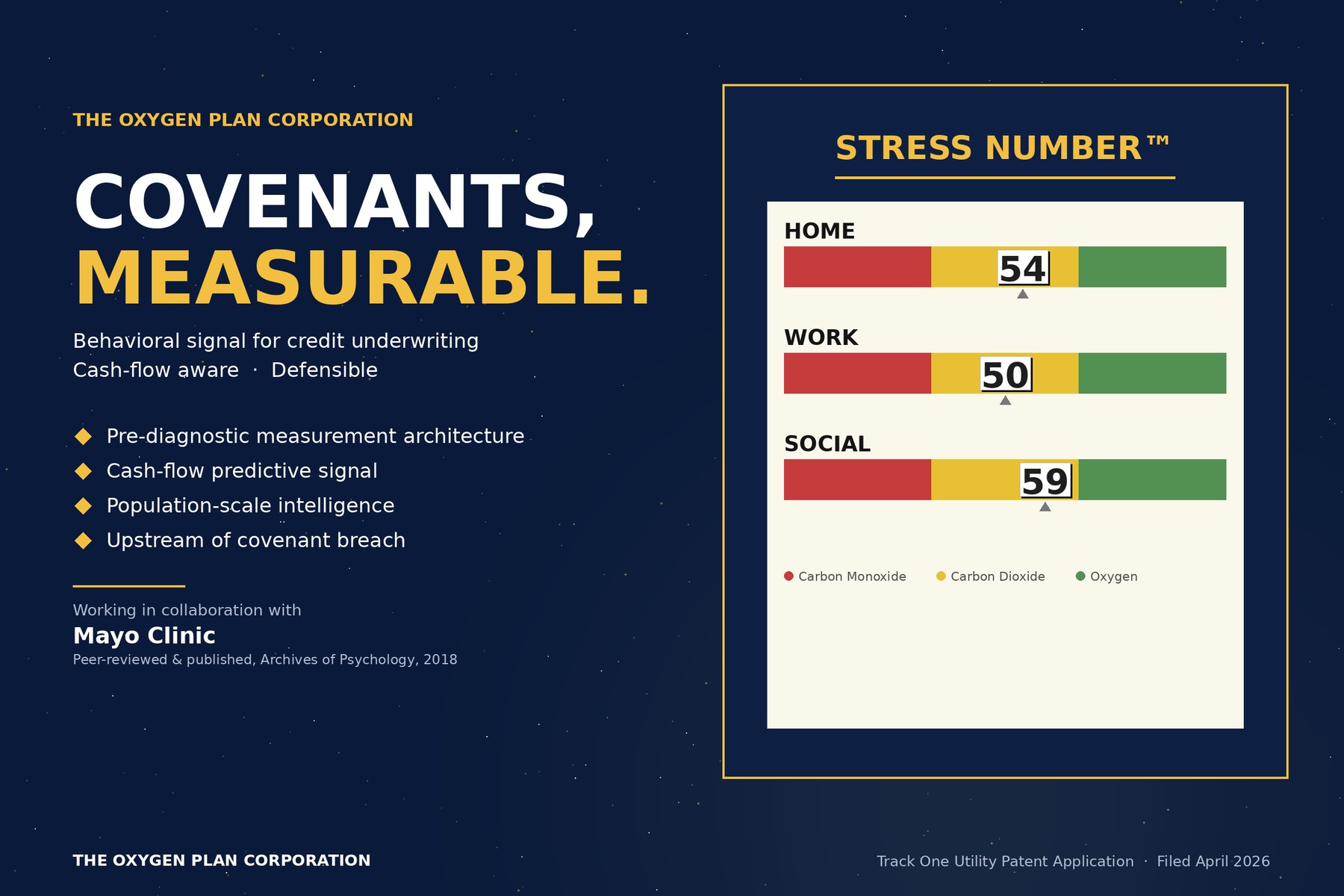
Healthcare Credit Funds
52
Healthcare Credit Funds
Healthcare credit underwrites against operator cash flows that are materially affected by behavioral exposure. The substrate informs covenant modeling and credit risk pricing.
— Class IX —
Hyperscale, AI & Cybersecurity
53 – 57
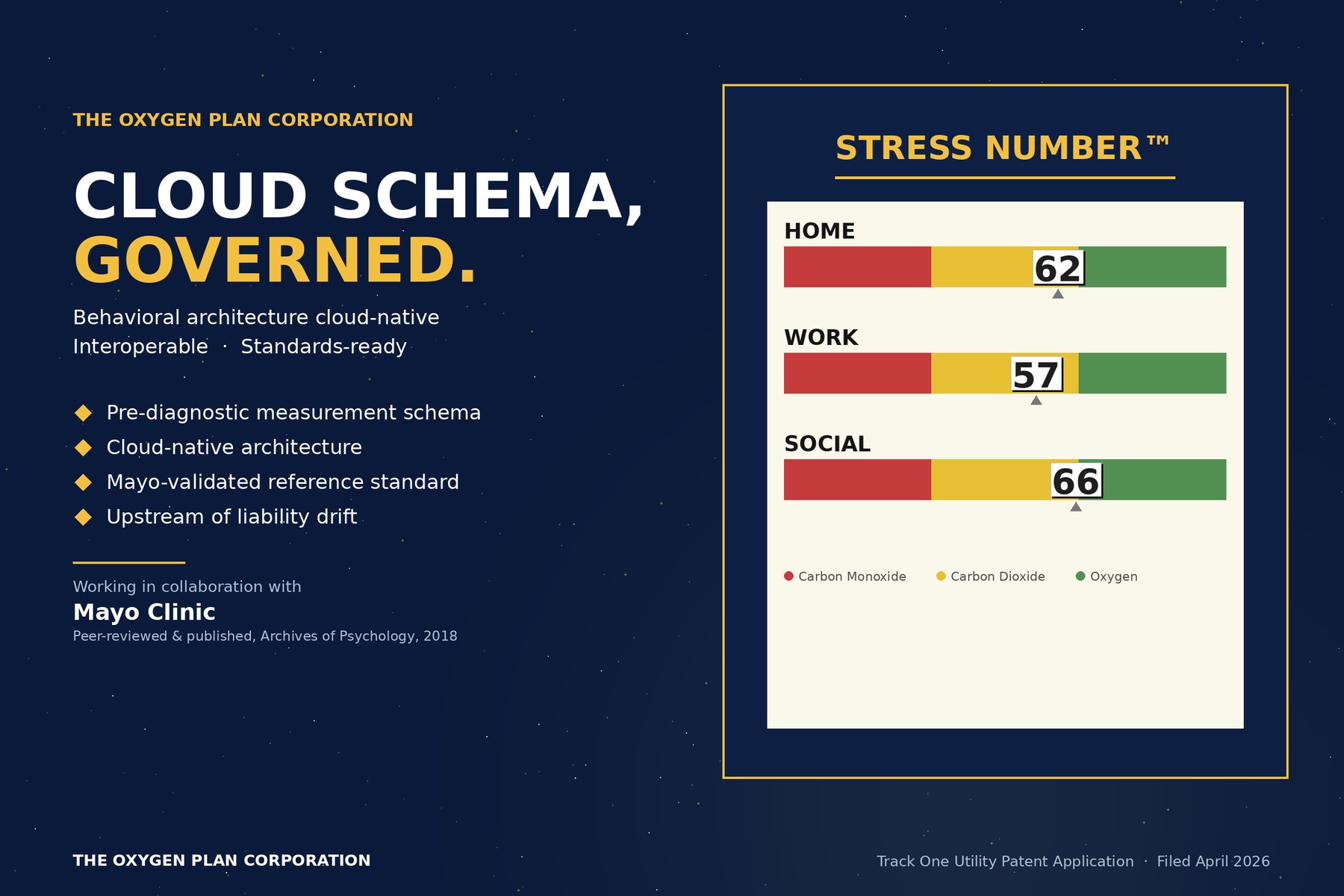
Hyperscale Cloud · Healthcare
53
Hyperscale Cloud · Healthcare
Hyperscale platforms host healthcare workloads without a credentialed behavioral measurement layer. The substrate provides the credentialed input layer for population-scale health AI.
Healthcare AI · LLM Platforms
54
Healthcare AI · LLM Platforms
Health AI platforms require credentialed measurement infrastructure to operate at institutional altitude. The substrate provides the upstream coordinate system AI applications structurally depend on.
Consumer Tech · Health Surfaces
55
Consumer Tech · Health Surfaces
Consumer health surfaces aggregate behavioral signal without a standardized measurement instrument. The substrate provides the standardized index for consumer-scale aggregation.
Precision Medicine Platforms
56
Precision Medicine Platforms
Precision medicine requires phenotypic stratification including behavioral state. The substrate provides the standardized pre-diagnostic measurement layer.
Healthcare Cybersecurity and Compliance
57
Healthcare Cybersecurity & Compliance
Compliance frameworks increasingly require auditable behavioral health measurement under federal interoperability and fiduciary mandates. The substrate provides the standardized audit-grade instrument.
— Class X —
Global & Strategic Consulting
58 – 60
Global Consulting · Strategy
58
Global Consulting · Strategy
Big Four governance practices advise institutional clients across the healthcare financial ecosystem without a shared behavioral measurement standard. The substrate provides the comparative measurement infrastructure the advisory function requires.
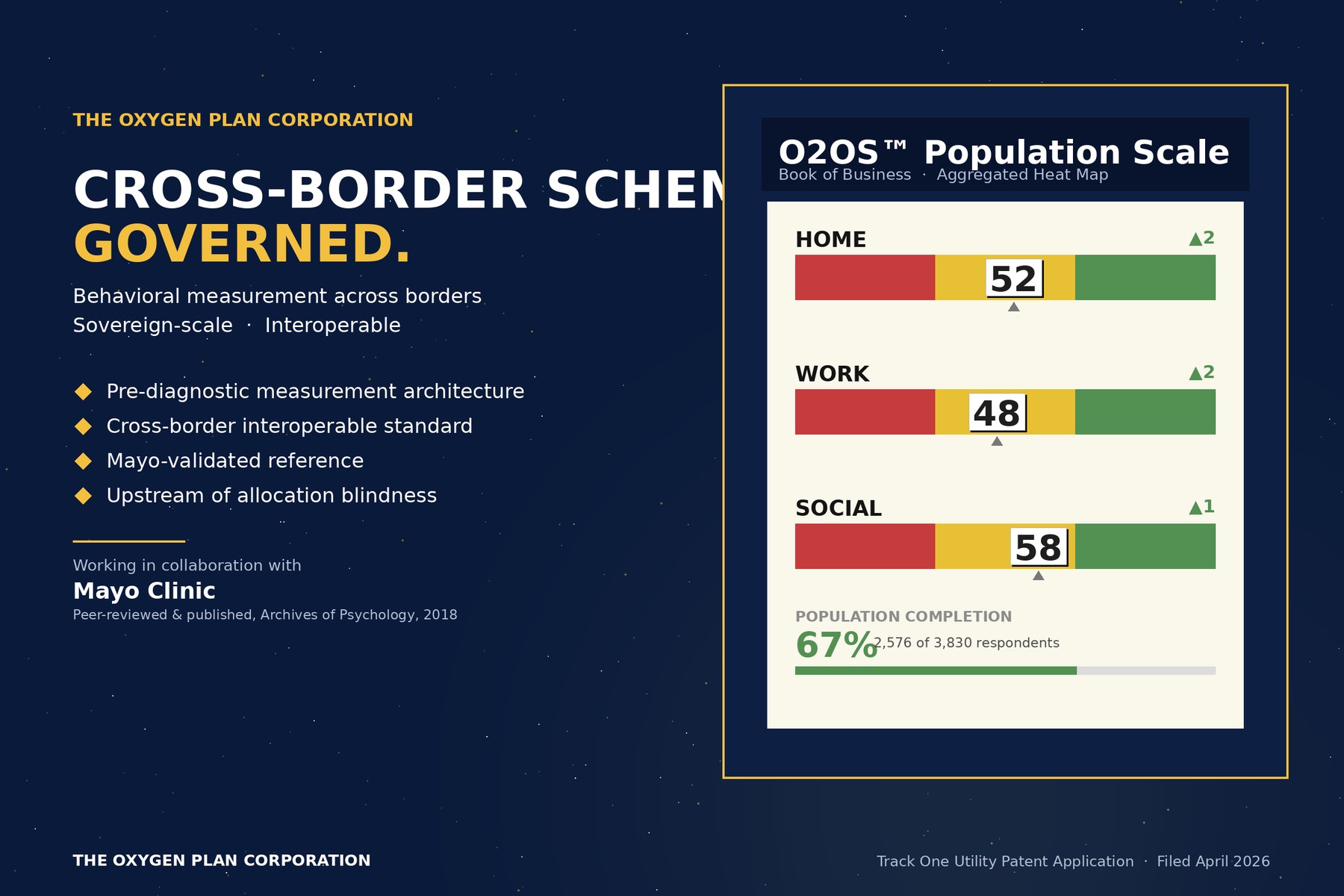
International Sovereign Health Systems
59
International Sovereign Health Systems
National health systems carry population-scale behavioral exposure without standardized cross-jurisdiction measurement. The substrate provides comparable measurement infrastructure for sovereign coordination.
Global Reinsurance · Behavioral
60
Global Reinsurance · Behavioral
Global reinsurance treaties cede behavioral exposure across jurisdictions without a shared coordinate system. The substrate enables comparable cross-jurisdiction risk submissions.
— The Convergence —

Sixty institutional classes. One coordinate system.

Behavioral risk has been priced, underwritten, audited, and absorbed across sixty distinct institutional classes — each in its own currency, each without a shared measurement substrate. The Pre-Diagnostic Index™ is the upstream coordinate that converts disparate institutional treatments of behavioral exposure into a comparable measurement layer.

The architecture is the same. The mathematics is the same. The substrate is the same. The institutional applications differ — and continue to expand as federal payment infrastructure converges around the measurement category.

Read the Category Architecture →